This article is for informational and educational purposes only. It does not constitute financial advice. Always consult a qualified financial advisor before making any investment decisions.
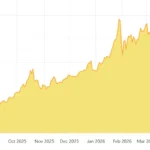
Silver hit $121.62 per troy ounce in January 2026 — its highest recorded price in history. Yet a surprising number of people still ask: is silver a precious metal, or is it just an industrial commodity dressed up in investment language? The answer matters more in 2026 than at any prior point in modern financial history, because the classification has officially changed.
Is silver a precious metal? Yes — unambiguously, by every recognised definition. But what’s new is that silver is now simultaneously classified as a critical mineral by the U.S. government, a designation that repositions the metal from monetary curiosity to strategic national asset. That dual identity is reshaping supply chains, investment flows, and price dynamics in ways that most retail buyers haven’t yet fully absorbed.
What Makes a Metal “Precious” — and Does Silver Qualify?
The term precious metal has a precise meaning in materials science, finance, and commodity markets. A metal earns that classification by meeting three criteria: it must occur naturally in the Earth’s crust, it must be rare relative to base metals, and it must resist oxidation and corrosion — meaning it doesn’t rust, tarnish, or degrade under normal conditions.
Silver is found at concentrations of just 75 parts per billion in the Earth’s crust, making it significantly scarcer than base metals like copper or iron. Its chemical symbol is Ag, derived from the Latin argentum, and its ISO 4217 currency code is XAG — the same internationally recognised framework that assigns XAU to gold. That currency code is not cosmetic. It confirms silver’s standing as a monetary asset in global financial markets alongside gold, platinum, and palladium.
Gold and silver are the only hard assets you can put in your pocket and walk away from human strife, or into a vault to safeguard your wealth from monetary inflation. No other element in the periodic table carries that combination of portability, corrosion resistance, monetary history, and physical scarcity.
Silver also has the highest electrical conductivity of any metal, the highest thermal conductivity — more than copper, aluminium, or bronze — and high corrosion resistance. Those physical properties are what make it genuinely irreplaceable in modern industry. And that’s where silver diverges sharply from gold.
So is silver a precious metal? Definitively yes. But understanding why in 2026 requires going far beyond the standard answer.
Silver’s Unique Position: Precious Metal and Industrial Workhorse
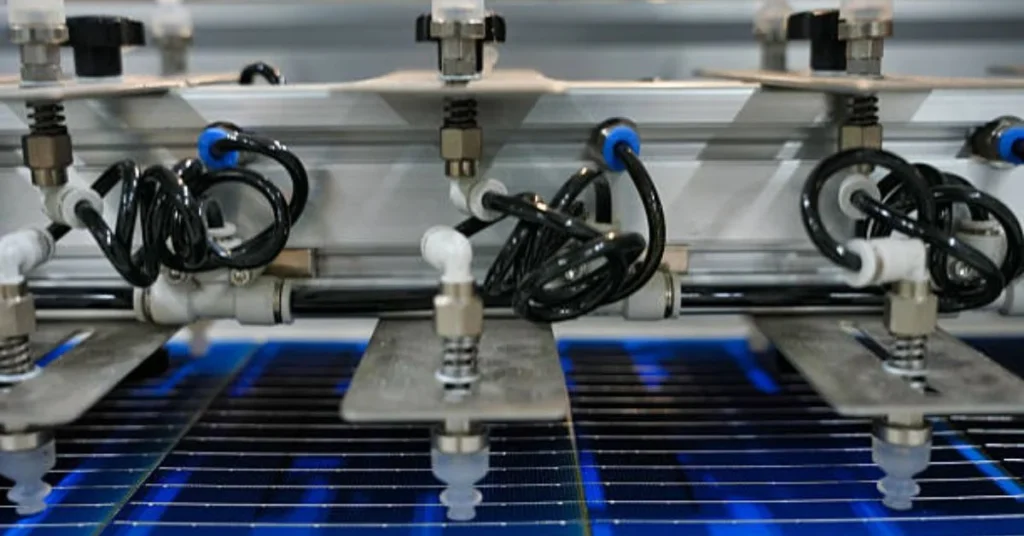
Gold is held in vaults. Silver is consumed in factories. That single sentence captures the structural difference that makes the silver market unlike any other precious metal market in the world.
Silver’s industrial consumption hit 680.5 million ounces in 2024 — a record high for the fourth consecutive year, representing 59% of total silver demand, up from roughly 40% just two decades ago. No other precious metal comes close to that level of industrial absorption. Platinum has meaningful industrial demand, but silver’s consumption spans more sectors more deeply than any other precious metal.
According to the USGS Mineral Commodity Summaries 2026, the estimated U.S. domestic uses for silver in 2025 were electrical and electronics 25%, photovoltaics 12%, coins and medals 12%, and physical investment bars 30% — demonstrating how silver simultaneously functions as a financial asset and an industrial input within the same market.
Each solar panel uses silver paste screen-printed onto silicon wafers to form the electrical pathways that capture energy. Silver represents about 14% of a silicon solar panel’s manufacturing cost, and with between 5 and 15 grams of silver needed per panel, costs accumulate rapidly at scale. Battery electric vehicles use between 25 and 50 grams of silver per vehicle, creating a structural demand stream tied directly to EV production volumes.
And that’s the thing that separates silver from every other precious metal: manufacturers don’t get to choose whether to use it. Solar panels need it. EVs need it. Semiconductors need it. No other material matches silver’s combination of the highest electrical conductivity of any metal, thermal stability over 25+ years of use, and seamless compatibility with silicon at manufacturing scale.
Is silver a precious metal that also drives the clean energy transition? Increasingly, that’s exactly what it is.
The Critical Mineral Reclassification — What It Changes
For most of financial history, silver was treated as a monetary metal with industrial side uses. That framing changed formally in late 2025.
On November 7, 2025, the U.S. Final 2025 List of Critical Minerals was published in the Federal Register, and silver was added alongside lithium, cobalt, and rare earth elements as a material deemed essential to U.S. economic and national security. Previous USGS lists had excluded silver entirely, treating it primarily as a monetary asset.
The new classification acknowledges silver’s irreplaceable role in critical technologies from solar photovoltaic cells to defense systems demanding ultra-reliable conductivity, and legally mandates government focus on securing domestic supply chains through enhanced permitting, subsidies, and strategic stockpiling.
For investors asking is silver a precious metal or an industrial commodity, that designation answers the question definitively: it’s both, and the U.S. government now treats the industrial classification as the more strategically important of the two. That’s a structural shift with long-term pricing implications that won’t reverse regardless of short-term market movements.
What the Research Shows: Six Consecutive Years of Supply Deficit
Anyone tracking silver markets closely knows that the supply picture is the most important data point — and it’s alarming by any historical standard.
According to the World Silver Survey 2026, published by the Silver Institute and Metals Focus on April 15, 2026, the global silver market ran a deficit of 40.3 million ounces in 2025, and a sixth consecutive deficit of 46.3 million ounces is projected for 2026. Since 2021, the market has drawn down a cumulative 762 million troy ounces from above-ground stocks to cover the gap between supply and demand.
762 million ounces drawn from existing stockpiles over five years. That number has no modern precedent in the silver market.
The Silver Institute estimates that global demand of silver in 2025 reached 35,884 tons while supply came to only 32,206 tons — with global demand outpacing supply every year since 2021.
The underlying drivers that supported silver throughout much of 2025 have remained firmly in place into 2026 — tight physical supply in London, a volatile geopolitical backdrop, U.S. policy uncertainty, and concerns over the Federal Reserve’s independence, according to the Silver Institute’s 2026 outlook.
Why can’t supply simply scale up to meet demand? Because roughly 80% of silver production comes as a byproduct of mining lead, zinc, copper, and gold — which means silver mine output is determined by demand for those other metals, not by silver’s own price. A silver price spike doesn’t trigger new silver mines. It triggers more lead and zinc mines, which may or may not produce meaningful silver as a secondary product. That structural constraint is permanent, not temporary.
What People Get Wrong About Silver as a Precious Metal
The most persistent misconception: that silver is simply “poor man’s gold” — a cheaper substitute for investors who can’t afford bullion. This framing was arguably defensible in 2010. In 2026, it fundamentally misrepresents what silver is.
Gold’s demand is dominated by investment and jewellery — categories that respond to investor sentiment and can be reduced when prices rise. Silver’s largest demand category is industrial, which is largely non-discretionary. Solar manufacturers, EV producers, and semiconductor fabs don’t cut silver out of their processes because prices go up — they either absorb the cost or scramble to reduce silver content per unit while overall volume climbs anyway.
Silverware demand is expected to contract by approximately 17% in 2026, and jewellery fabrication dropped 8% in 2025 — the price-sensitive discretionary segments are responding to high prices exactly as expected. But total demand remains in deficit despite those reductions, because industrial and investment demand is filling the gap.
The counter-intuitive insight: when people ask is silver a precious metal and expect a simple yes, the honest answer is that silver is something harder to categorise — a precious metal, an industrial critical mineral, and a monetary asset simultaneously. No other element in the periodic table occupies all three of those roles at once.
Silver’s 6,000-Year Monetary Track Record
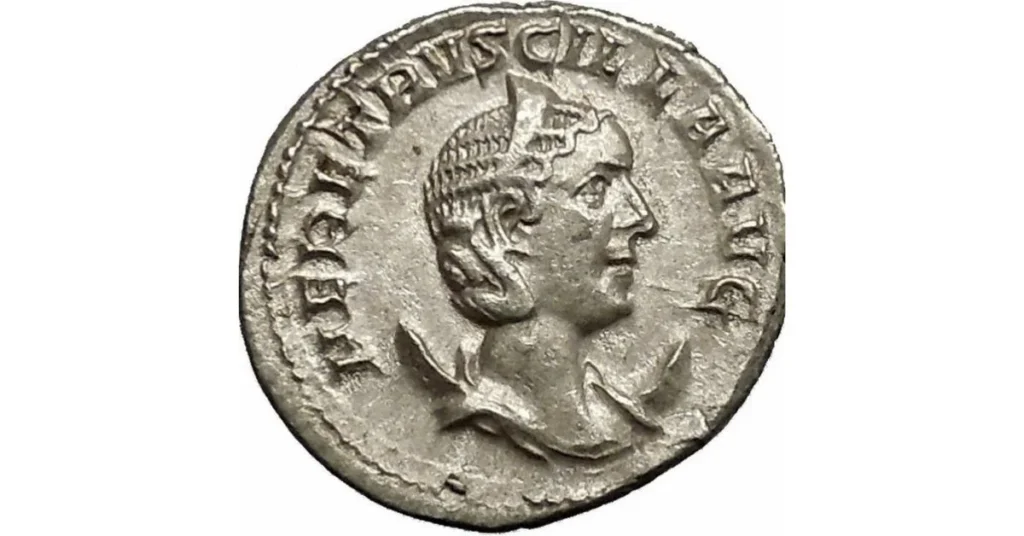
Source: The government of the Roman Empire., Public domain, via Wikimedia Commons
Before solar panels and semiconductors, silver carried a different kind of weight. Silver was first used as currency in 700 B.C., and for centuries it was the primary medium of global trade, driving trade routes and empires — silver, not paper, was the global currency.
The U.S. dollar itself was tied to silver under the Coinage Act of 1792, with the silver dollar defined as the foundational unit. The phrase “pieces of eight” — the Spanish silver real that financed the colonial economy — reflects how thoroughly silver underpinned international commerce for three centuries before gold took precedence.
Silver has been valued for 6,000 years, holds the highest electrical and thermal conductivity of all metals, is the most reflective metal, and boasts natural antimicrobial properties that make it valuable across medicine, water filtration, and industrial sterilisation — a combination of attributes no synthetic material has yet replicated.
That history matters for investors. Silver isn’t precious because a market decided it is. It’s precious because geology, chemistry, and 6,000 years of human civilisation independently arrived at the same conclusion.
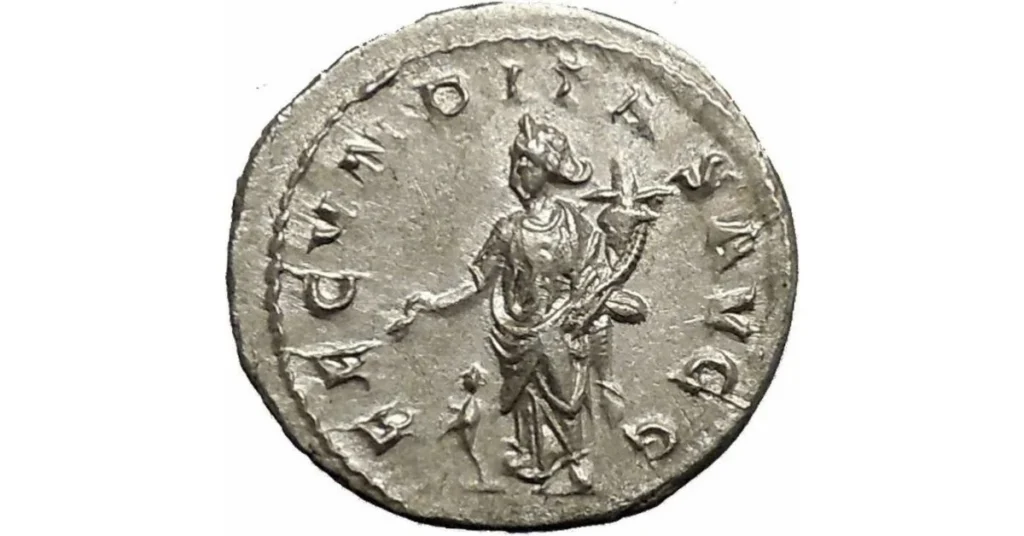
Source: The government of the Roman Empire., Public domain, via Wikimedia Commons
Is Silver a Precious Metal Worth Holding in 2026?
The supply deficit data, the critical mineral reclassification, and the clean energy demand trajectory all point in the same direction. But the investment case for silver involves risks that gold doesn’t carry at the same intensity.
Silver prices are significantly more volatile than gold because of the industrial demand component. Silver staged a powerful rally at the beginning of 2026, pushing to fresh highs as market fundamentals tightened, with futures prices surging above $85 driven by export restrictions from China, rising demand from green technologies, and renewed interest in silver as a safe-haven asset. That kind of move — driven by multiple simultaneous factors — can reverse partially when any one of those factors shifts.
The Silver Institute confirms that silver’s value has been proven as a precious metal and time-tested commodity, with global silver investment projected to remain strong in 2026 against the backdrop of a sixth consecutive annual market deficit.
For anyone still asking is silver a precious metal in the context of building a portfolio: the classification question was settled centuries ago. The more useful question in 2026 is whether the structural supply deficit, the critical mineral designation, and the clean energy demand surge create conditions that support the price over a meaningful investment horizon.
Past performance does not guarantee future results.
Also Read: Silver Bullion Explained: The Surprising Truth About the White Metal
FAQ
Is silver officially classified as a precious metal?
Silver carries the ISO 4217 currency code XAG, placing it alongside gold (XAU), platinum (XPT), and palladium (XPD) as a recognised monetary precious metal in global financial markets. Every major commodity exchange — COMEX, LBMA — trades silver as a precious metal.
Is silver rarer than gold?
Not by crustal abundance — gold is slightly rarer at approximately 4 parts per billion versus silver’s 75 parts per billion. However, silver is mined at a much higher rate and more than 80% of silver production comes as a byproduct of other metal mining, meaning supply cannot respond freely to silver price signals.
Why is silver both a precious metal and an industrial metal?
Silver’s physical properties — highest electrical conductivity of any element, highest thermal conductivity, and natural antimicrobial characteristics — make it irreplaceable in solar panels, EVs, semiconductors, and medical equipment. No other precious metal has industrial demand comprising nearly 60% of total annual consumption.
Is the silver market currently in deficit?
According to the World Silver Survey 2026, the silver market ran a 40.3 million ounce deficit in 2025 and is projected to widen to a 46.3 million ounce shortfall in 2026 — the sixth consecutive annual deficit. Cumulative above-ground stock drawdowns since 2021 have reached 762 million troy ounces.
Was silver recently added to the U.S. critical minerals list?
On November 7, 2025, the U.S. Geological Survey added silver to the Final 2025 List of Critical Minerals, published in the Federal Register, recognising its irreplaceable role in solar photovoltaic cells, defense systems, and advanced manufacturing as a matter of national security.
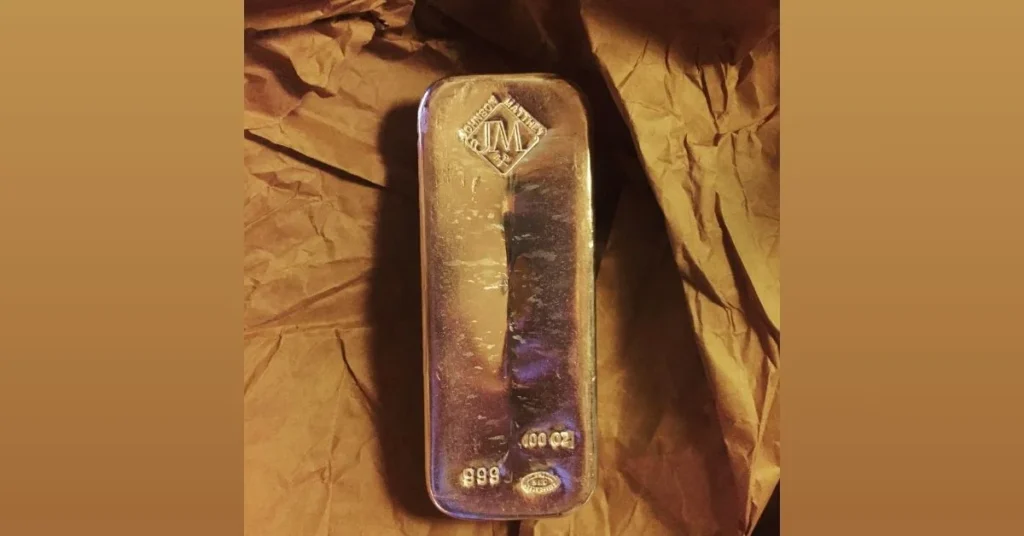
Featured Image Source: Ausecure, CC BY-SA 4.0 https://creativecommons.org/licenses/by-sa/4.0, via Wikimedia Commons
This article is for informational and educational purposes only. It does not constitute financial advice. Always consult a qualified financial advisor before making any investment decisions. Past performance does not guarantee future results.