This article is for informational and educational purposes only. It does not constitute financial advice. Always consult a qualified financial advisor before making any investment decisions.
Every year, millions of buyers purchase 22 karat gold jewelry, coins, and bullion products without fully understanding what the number means, what the alloy contains, or why a 22 karat stamp makes certain coins more durable than their 24 karat counterparts. That last point surprises almost everyone. The U.S. Mint has struck 22 karat gold coins since 1986 — specifically because 91.67% purity delivers better resistance to wear than pure gold ever could.
And in 2026, with gold spot prices reaching record highs, understanding exactly what 22 karat gold is worth — and when it outperforms other purity levels — matters more than at any point in recent memory.
What 22 Karat Gold Actually Means
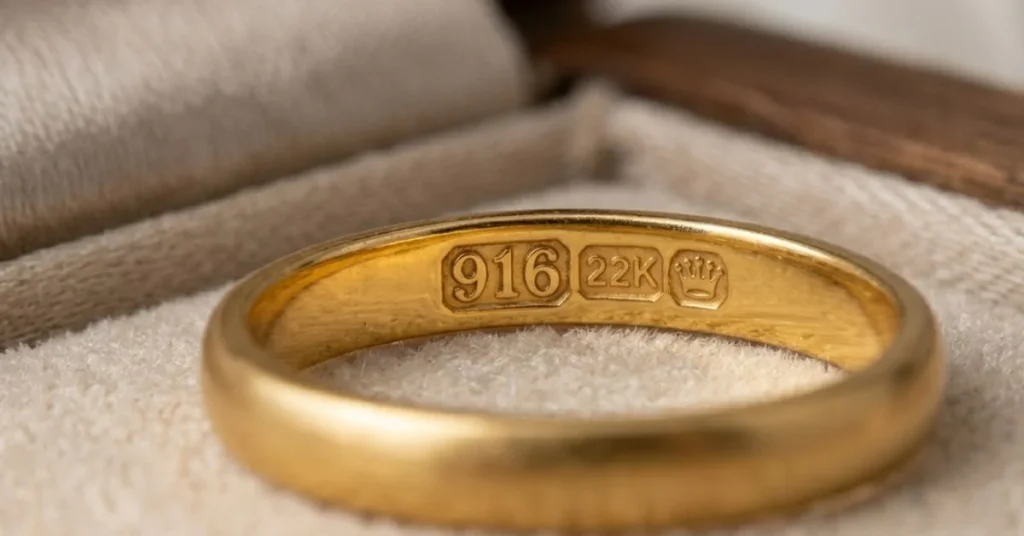
22 karat gold means that out of 24 parts, 22 parts are pure gold and the remaining 2 parts are other metals. This gives 22 karat gold a purity of 91.6%, with 8.4% alloy metals.
The balance is typically made of silver, copper, or a combination of both. Because of the alloy metals, 22 karat pieces are noticeably more durable than 24 karat pieces.
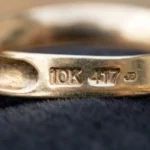
The hallmark stamp tells you everything. 916 gold means a piece is 91.6% pure gold and 8.4% other metals — the 916 figure coming from the millesimal fineness system, which expresses gold purity in parts per thousand. So when you pick up a ring, bangle, or coin stamped “916,” you’re holding the same metal as something stamped “22K.” Different notation. Identical purity.
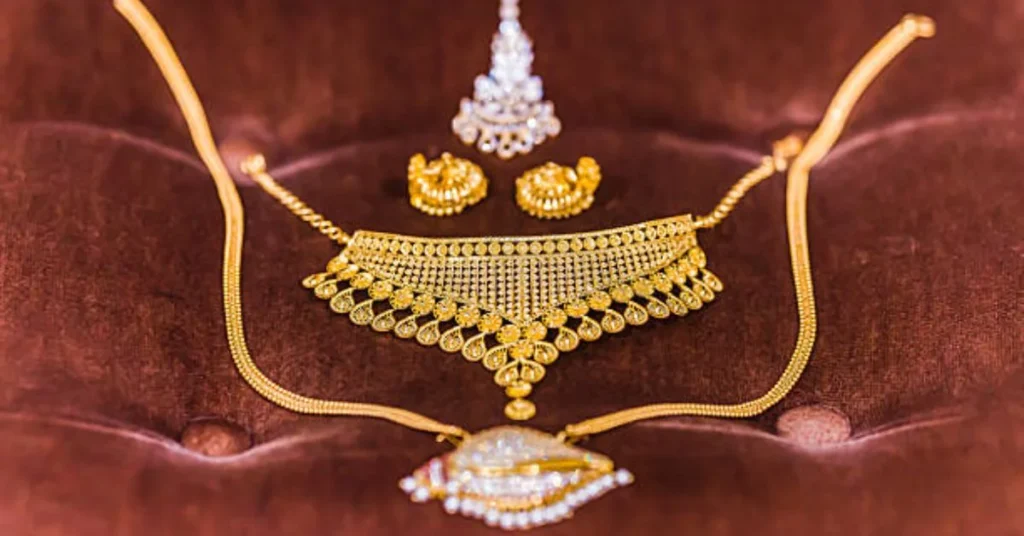
22 karat gold is common in South Asian and Middle Eastern jewelry, and is also used in coins like the American Gold Eagle and South African Krugerrand. The deep gold color is distinctive, but the high gold content makes it soft relative to lower karats — 22 karat jewelry shows wear faster than 18 karat or 14 karat pieces.
The practical consequence: if you’re buying 22 karat gold for daily wear in a high-contact piece like a ring, expect surface marks to appear faster than they would on 18 karat. For necklaces, bangles, earrings, and ceremonial jewelry where wear is occasional, that tradeoff rarely matters.
22 Karat Gold’s Exact Alloy Composition in 2026 Coins
Most people think of 22 karat gold only in the context of jewelry. The more revealing story is what the U.S. Mint does with it.
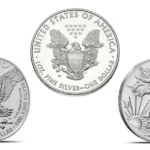
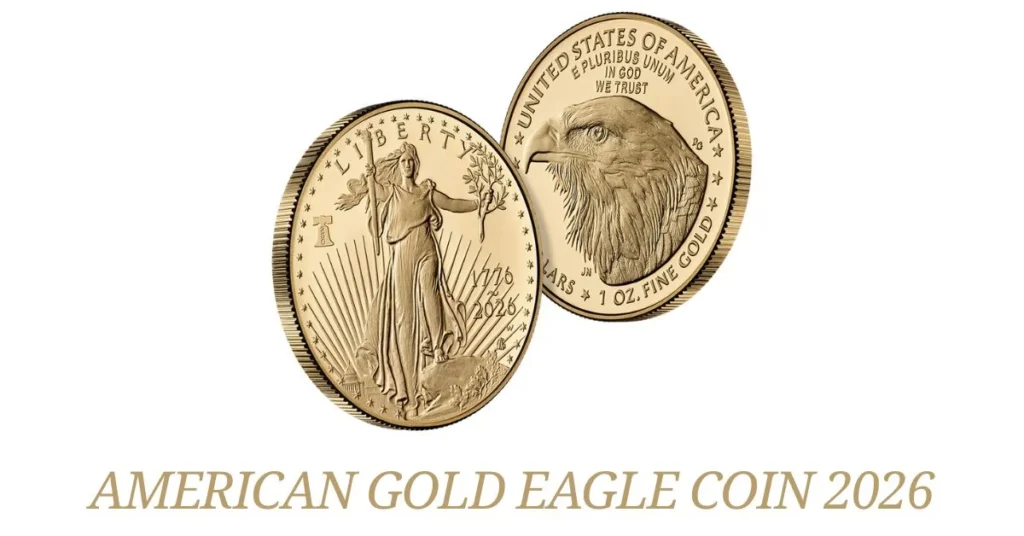
All American Gold Eagles are 22 karat: 91.67% gold, 3% silver, and 5.33% copper. Issue prices adjust weekly based on the Mint’s precious metals pricing matrix. That specific copper-silver alloy formula isn’t arbitrary — it was chosen deliberately to produce a coin hard enough to survive repeated handling without the soft deformation that affects 24 karat bullion coins.
The 2026 American Eagle Gold Proof Coins are struck in 22 karat gold at the West Point Mint, serving as collector versions of the official American Eagle Gold Bullion Coins. To mark America’s 250th anniversary, the 2026-W coin carries a Liberty Bell privy mark with the numeral “250” and dual dates “1776~2026,” with a mintage limit of 7,500 pieces at a launch price of $5,370.
Here’s what most investors miss: a 1-ounce 22 karat bullion coin still contains exactly 1 troy ounce of pure gold. Because the coin is 91.67% gold, its total physical weight is slightly more than 1 troy ounce — the difference being the silver and copper alloy. The pure gold content is guaranteed. The total coin weight is higher to compensate. You don’t lose any gold by buying 22 karat over 24 karat in a standard 1-ounce coin.
The 22 karat alloy is harder and more scratch-resistant than 24 karat — relevant for proof coins that may be displayed. The 24 karat Gold Buffalo’s .9999 purity appeals to investors focused on gold content per coin, while the 22 karat Eagle’s durability serves collectors who handle and display their coins.
What the Research Shows: Value, Resale, and the 916 Standard
The 22 karat gold rate is calculated as 91.6% of the 24 karat rate per gram. This proportion stays constant — it reflects pure gold content, not market mood. The 22 karat gold rate moves with the international gold spot price exactly like 18 karat and 24 karat.
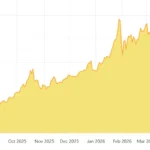
Run the math at current prices. Based on a spot price of $4,540.30 per troy ounce as of late May 2026, 22 karat gold trades at approximately $133.81 per gram. For comparison: 18 karat gold at 75% purity calculates to roughly $109 per gram at the same spot price, and 14 karat at 58.33% purity comes to approximately $85 per gram. A 10-gram 22 karat piece nets significantly more than equivalent weights of lower purities at resale — the gap between 22 karat and 14 karat on a 10-gram piece is material.
22 karat gold is typically used in jewelry where high gold content and visual richness are prioritized. Its composition gives it a deep yellow color that closely resembles pure gold. Because 22 karat gold is softer than lower karat options, it is less commonly used for everyday wear items like thin rings or delicate settings. Instead, it is often crafted into more substantial pieces designed for occasional use or long-term value.
The counter-intuitive insight: 22 karat gold often carries lower making charges per gram in jewelry markets than 18 karat, despite having higher gold content. The reason is simple — less alloy metal means simpler metallurgical processing for many traditional designs. In markets like India where 22 karat dominates wedding and ceremonial jewelry, this dynamic keeps 22 karat accessible despite its higher intrinsic gold value.
22 Karat Gold vs. 24 Karat: Who Should Buy Which
This comparison trips up buyers at every level, from first-time jewelry purchasers to experienced investors.
24 karat gold is 99.9% pure, highly lustrous, and naturally soft. Because of this high purity, 24 karat gold is valued mainly for investment rather than everyday wear. It is more commonly found in gold bars and investment coins. 22 karat gold is created by mixing pure gold with small amounts of metals such as copper or silver — this blend improves strength, making 22 karat suitable for daily use.
22 karat jewelry is priced at resale based on the net gold it contains and the purity confirmed by the buyer. 24 karat bars with clear certification are simpler to value and sell. If budget is tight but you want wearability, 18 karat or 14 karat offer better hardness and lower making costs on certain designs.
For bullion investors choosing between a 22 karat American Gold Eagle and a 24 karat Canadian Maple Leaf, both containing 1 troy ounce of pure gold: the Eagle’s durability advantage matters for long-term storage and handling, while the Maple Leaf’s .9999 purity satisfies markets that require higher fineness thresholds. Neither outperforms the other on gold content for a standard 1-ounce product — you’re buying the same amount of gold either way. The choice comes down to durability preference and secondary market liquidity in your region.
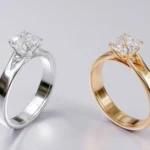
Those who want the richest, warmest color for their jewelry often gravitate toward 22 karat or 18 karat gold, while those who prefer a subtler, lighter hue might choose 14 karat gold. The rich yellow color of 22 karat is a direct function of high gold content — lower karat alloys with more copper shift warmer toward rose tones, while higher silver content pushes the color cooler.
What People Get Wrong About 22 Karat Gold and Investment Purity
The most persistent myth: that buying 22 karat gold means accepting a compromise on value. That framing is wrong.
Purity and weight do not always align. A gold coin might contain exactly 1 troy ounce of pure gold even if its overall composition is 22 karat. For example, the American Gold Eagle is minted in 22 karat gold but still contains a full troy ounce of pure gold. The 91.67% figure is the composition of the metal, not a fraction of the gold you’re receiving. An Eagle investor gets 1.000 troy ounce of fine gold. Period.
The second misconception involves the hallmark itself. It’s important to distinguish solid gold from gold-plated or gold-filled items. These alternatives may look similar but contain significantly less gold, which greatly impacts resale value. The “916” hallmark is widely used internationally and is one of the most reliable indicators of 22 karat purity — but if a stamp is not visible, the item may still be gold, as markings can fade over time. Professional testing is the best way to verify purity in these cases.
And here’s the third: many Western buyers assume 22 karat is primarily an Asian jewelry standard with limited global relevance. 22 karat gold is a popular choice for jewelry across many parts of Asia and the Middle East, consisting of 91.67% gold and 8.33% alloy. Its high gold content makes it a valuable asset globally. But the American Gold Eagle — the most widely traded gold coin in the United States — is 22 karat. The South African Krugerrand, the world’s first modern gold bullion coin introduced in 1967, is also 22 karat. This purity standard underpins two of the most liquid gold coins on the planet.
If you skip verifying the hallmark before buying, you risk paying 22 karat prices for gold-filled or lower-karat metal — and discovering the discrepancy only at resale when a dealer runs an XRF test.
How to Calculate 22 Karat Gold Value Right Now
The formula is fixed and straightforward.
Melt value = weight in grams × 0.916 × current spot price per gram
The per-gram melt value shows what the pure gold content is worth at the posted spot price. Scrap buyers, pawn shops, and jewelers offer less than melt value to cover refining costs and margin. Payouts vary by buyer type, lot size, and other factors — use the melt value as a baseline, then compare actual offers against it.
A worked example at current prices: a 10-gram 22 karat gold bangle contains 9.16 grams of pure gold. At $139.67 per gram (approximate spot on June 10, 2026 at $4,345 per troy ounce), the melt value is approximately $1,279. A scrap buyer might offer 80–90% of that, depending on lot size and buyer competition in your market.
Less durable than 18 karat or 14 karat, which have more alloy metals, 22 karat gold is best suited for ornamental jewelry such as necklaces, bangles, and earrings — not for items exposed to rough use like rings or watches. Its resale value is higher than 18 karat or 14 karat due to greater gold content.
Past performance does not guarantee future results.
22 Karat Gold in 2026: Where It Stands
As of 2026, with gold trading near record-breaking levels and the U.S. Mint releasing semiquincentennial 22 karat Gold Eagles with a 7,500-coin mintage cap at $5,370 per coin, the 22 karat standard sits at the intersection of investment practicality and jewelry tradition. It’s the purity that governments trust for flagship coins, that Asian and Middle Eastern markets prefer for high-value ornamental jewelry, and that scrap buyers value cleanly because the 916 hallmark system provides a globally recognized verification standard.
For investors, 22 karat gold with proper hallmarking delivers a near-pure gold product in a form that’s durable enough to handle, trade, and store without the surface deformation risk of 24 karat pieces. For jewelry buyers, the 91.67% gold content produces a rich yellow color and a melt value floor that lower karat alternatives simply cannot match at equal weight.
The number on the stamp — 22 karat — isn’t a compromise. It’s an engineering decision that eight centuries of precious metals commerce has validated.
Also Read: Is 10 Karat Gold Good? The Surprising Truth Buyers Miss
FAQ
Q1: Is 22 karat gold good quality?
22 karat gold is 91.67% pure gold — the second highest purity commercially available after 24 karat. It’s the standard used by the U.S. Mint for the American Gold Eagle and by the South African Mint for the Krugerrand, two of the most liquid bullion coins in the world.
Q2: What does the 916 stamp mean on gold?
916 and 22 karat are the same thing. The “916” stamp is the millesimal fineness expression of 22 karat purity — 916 parts pure gold per 1,000. It is the international hallmark standard for 22 karat gold and the most reliable indicator of that purity level in certified jewelry.
Q3: Is 22 karat or 24 karat gold better for investment?
Both contain the same amount of pure gold per troy ounce in standard bullion coins. A 22 karat American Gold Eagle and a 24 karat Canadian Maple Leaf each deliver exactly 1 troy ounce of fine gold. The difference is durability — the 22 karat alloy resists surface scratching better, while the 24 karat coin appeals to markets requiring maximum fineness.
Q4: How much is 22 karat gold worth per gram in 2026?
At a spot price of approximately $4,345 per troy ounce as of June 2026, 22 karat gold is worth approximately $128 per gram in melt value. That figure is 91.67% of the spot price per gram and moves in direct proportion to the live gold spot price.
Q5: Can you wear 22 karat gold every day?
Not without expecting visible wear over time. The 8.33% alloy makes 22 karat more durable than 24 karat pure gold, but it’s still softer than 18 karat or 14 karat. Necklaces, bangles, and earrings worn occasionally hold up well; rings and bracelets in daily contact with hard surfaces will show scratches faster than lower karat alternatives.
This article is for informational and educational purposes only. It does not constitute financial advice. Always consult a qualified financial advisor before making any investment decisions.