This article is for informational and educational purposes only. It does not constitute financial advice. Always consult a qualified financial advisor before making any investment decisions.
Pull out $100 today and ask: how much is 100 dollars of gold? The answer stops most people cold. At the live gold spot price of $4,341.07 per troy ounce recorded on June 7, 2026 by JM Bullion, your $100 buys approximately 0.023 troy ounces — just 0.71 grams of pure gold. That’s roughly the weight of a standard paperclip. Not the glittering pile most people imagine.
But that number alone tells only part of the story. How much is 100 dollars of gold actually worth in practice — after dealer premiums, storage, and real-world buying costs — is a different calculation entirely. And understanding that gap is exactly what separates informed bullion buyers from first-time buyers who get stung by surprise markups.
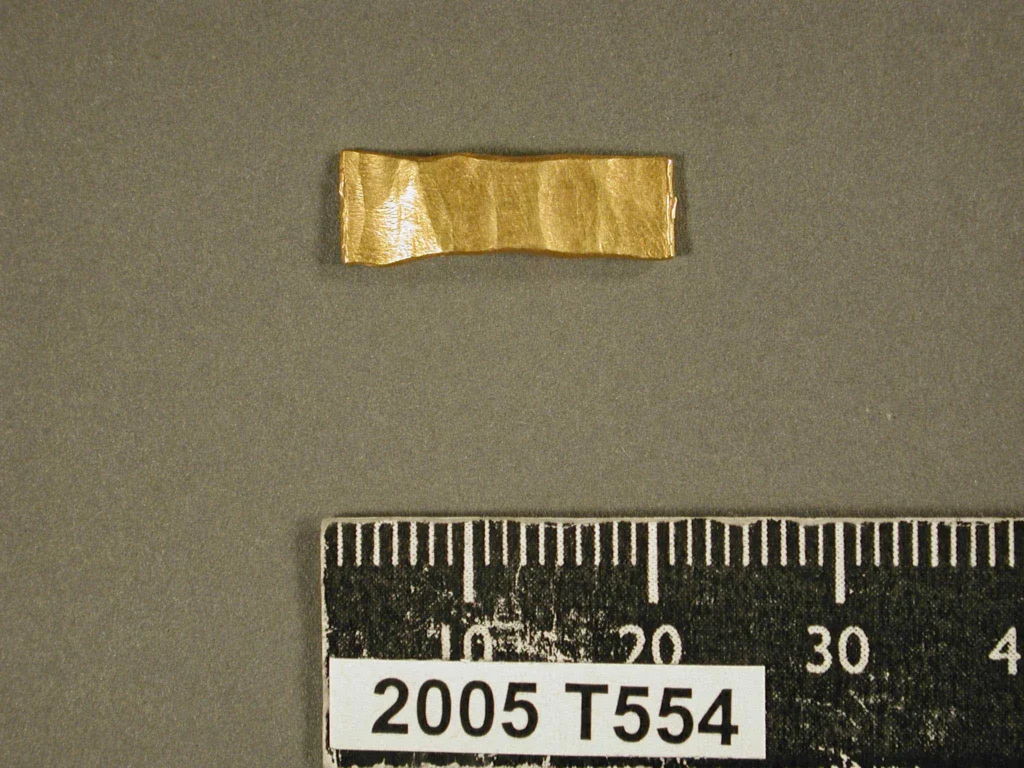
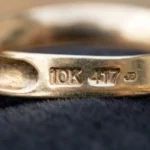
Source: The Portable Antiquities Scheme/ The Trustees of the British Museum, CC BY-SA 2.0 https://creativecommons.org/licenses/by-sa/2.0, via Wikimedia Commons
How Much Is 100 Dollars of Gold at Today’s Spot Price
The spot price is the global benchmark — the live price at which one troy ounce of gold trades on major markets including COMEX and the London Bullion Market Association (LBMA). The LBMA Gold Price set a new quarterly average record of $4,873 per troy ounce in Q1 2026, reflecting just how dramatically gold has repriced over the past eighteen months.
Based on the June 7, 2026 spot price of $4,341 per troy ounce, here is exactly how much is 100 dollars of gold across different weight units:
| Unit | Amount for $100 |
| Troy ounces | 0.0230 oz |
| Grams | 0.714 g |
| Pennyweights (dwt) | 0.459 dwt |
| Kilograms | 0.000714 kg |
One troy ounce equals 31.1035 grams — a standard that the LBMA, COMEX, and every major bullion dealer uses globally. Never confuse it with a regular avoirdupois ounce (28.35 grams), which is what your kitchen scale measures. The troy ounce is heavier. Mixing the two up is a common and costly error for new buyers.
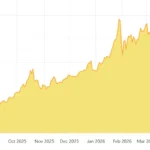
Gold’s all-time record high was achieved on January 28, 2026, at $5,602.22 per troy ounce. At that peak, $100 would have bought just 0.55 grams. So when people ask how much is 100 dollars of gold, the honest answer is: it depends on the day — and right now, gold is expensive by any historical measure.
What You Actually Pay: Spot Price vs. Real Purchase Price
Here’s the part that surprises most new buyers. The spot price is a wholesale benchmark — it’s not what you pay at retail. When you actually buy physical gold, dealers charge a premium above spot to cover minting, refining, insurance, logistics, and their operating margin.
The physical price you pay is spot plus a premium, and the dealer spread is the gap between what a dealer will sell to you for and what they will buy back from you. That spread represents your round-trip cost and directly impacts real-world returns.
Costco’s gold bar prices are typically just 1% to 2% above spot — less than some other dealers, which can be as much as 10% above spot. For a $100 purchase, a 5% premium means you’re effectively paying $105 for $100 worth of gold at melt value. The smaller the purchase, the more the premium bites — because fixed production and handling costs get divided across a smaller amount of metal.
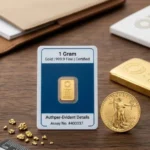
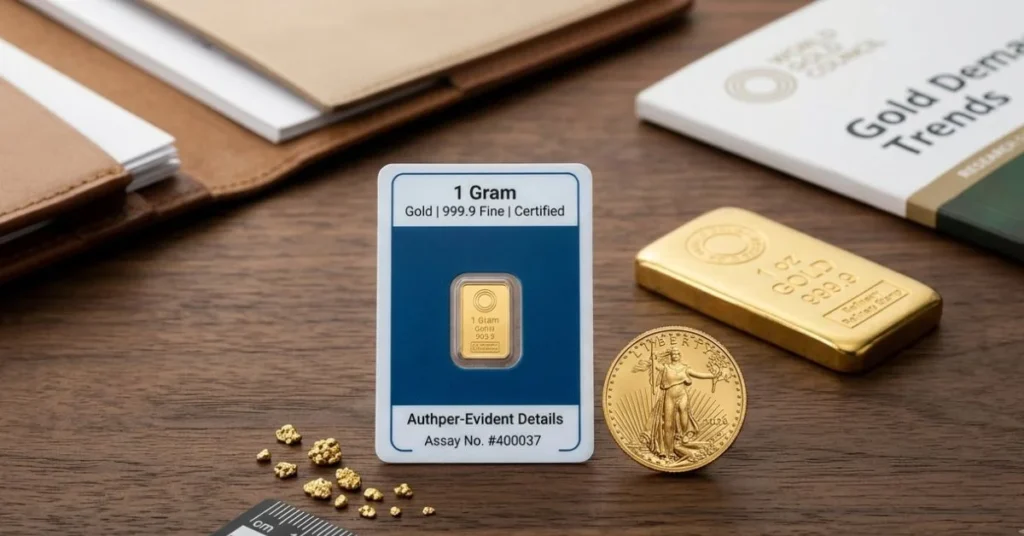
One gram gold coins, bars, and rounds are more expensive to produce and generally command higher premiums, so the retail price paid for a one gram gold bar will exceed its calculated melt weight.
And that means how much is 100 dollars of gold in practice depends not just on the spot price, but on exactly what you buy and where you buy it.
Why Is $100 of Gold So Small Right Now?
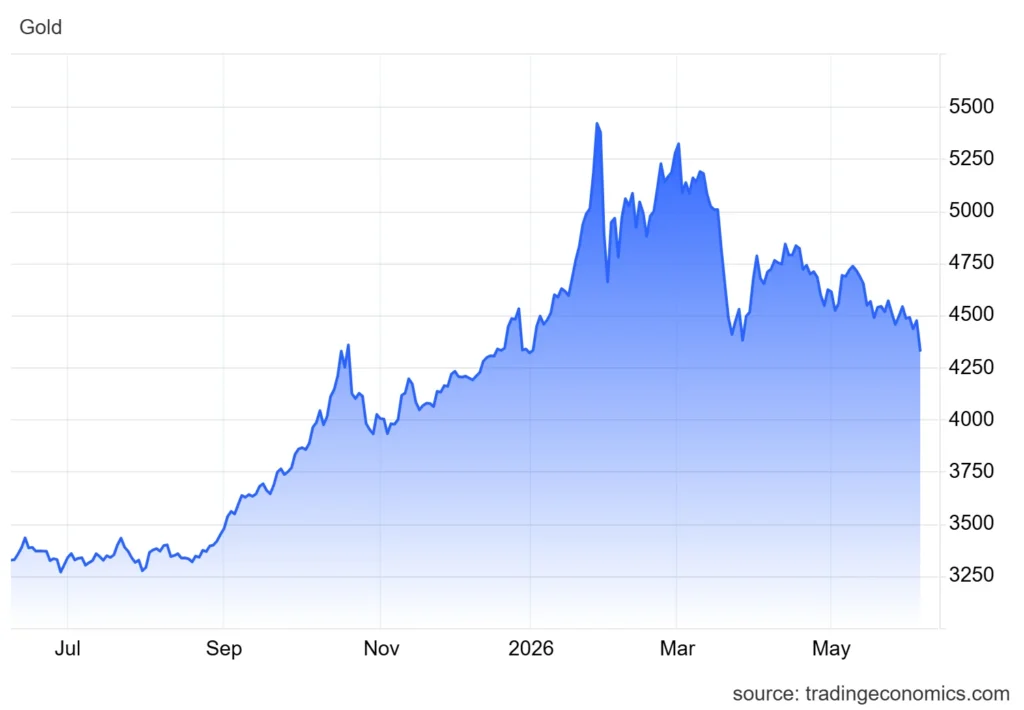
Anyone who studied gold markets in 2019 knows this question felt very different then. Gold traded around $1,400 per troy ounce that year — meaning $100 bought roughly 2.2 grams, more than three times what it buys today. The dramatic compression in what $100 gets you is a direct reflection of gold’s price surge.
Global gold demand surged past 5,000 tons in 2025 for the first time on record, driven by a historic wave of investment inflows and sustained central bank buying, according to the World Gold Council’s Gold Demand Trends report. The total value of global gold demand hit a record $555 billion — up 45% year-on-year.
Three forces specifically drove that demand spike:
- Central bank buying: Central banks globally purchased 863 tonnes of gold in 2025, nearly double the pre-2022 annual average of 400–500 tonnes, with more than 22 institutions reporting meaningful increases in their gold reserves.
- De-dollarisation: BRICS+ nations now hold 17.4% of global gold reserves, up from just 11.2% in 2019, as the freezing of Russia’s $300 billion in foreign exchange reserves in 2022 triggered a fundamental reassessment of reserve asset risk.
- AI-driven technology demand: Demand for gold used in technology edged higher in Q1 2026, fuelled largely by continued growth in AI infrastructure, adding a new demand category that didn’t meaningfully exist five years ago.
Each of these forces directly answers why how much is 100 dollars of gold has shrunk so sharply — more buyers, less available supply per dollar, and a structural shift in who holds gold and why.
What Experts Say: The $100 Entry Point in Context
Investors who track gold closely understand something that the spot price calculation misses: the purchasing power story runs in both directions. Yes, $100 buys less gold in grams today than it did in 2019. But $100 of gold bought in 2019 is now worth roughly $310 at current prices. Past performance does not guarantee future results — but the trajectory illustrates why small, consistent purchases attract serious attention.
Bar and coin demand is likely to feature more prominently in 2026 as high prices, a lack of viable alternative investments in some markets, inflation fears, and heightened uncertainty continue to attract both savers and speculators, according to the World Gold Council’s 2026 outlook.
The practical consequence for anyone asking how much is 100 dollars of gold: at current prices, a $100 purchase is almost entirely consumed by the per-unit premium on small-format products. A 1-gram gold bar retails for around $165–$185 at most dealers right now — well above the $140 spot equivalent — meaning $100 doesn’t even cover a single gram bar at retail.
And that’s the thing most content about gold omits. The spot-price math gives you the theoretical answer. The real-world answer, for someone trying to actually buy $100 of gold today, is that you can’t cleanly do it in physical form without paying significantly above the melt value of the metal.
What People Get Wrong About Small Gold Purchases
The biggest misconception: that buying $100 of gold is a straightforward transaction. For gold ETFs or fractional digital gold platforms, it is. For physical bullion, it isn’t.
The gold spot price does not include dealer premiums or other costs. When you buy physical gold, dealers add a markup above spot to cover minting, operating expenses, and profit. Knowing the spot price helps you judge whether a dealer’s premium is fair.
Second misconception: that all physical gold products carry the same premium. They don’t. A 400-troy-ounce London Good Delivery bar — the type held by central banks including the Deutsche Bundesbank and the Bank of England — trades almost at spot. A 1-gram bar carries a 15–25% premium. Coins like the American Gold Eagle or South African Krugerrand sit somewhere in between, typically 3–6% above spot for standard quantities.
The counter-intuitive insight here: buying less gold costs you more per gram. The economics of physical precious metals reward scale in ways that no other asset class quite replicates.
How Much Is 100 Dollars of Gold in Different Formats
Here’s a practical breakdown of what $100 realistically gets you across the main formats available in 2026:
Gold ETFs (e.g., SPDR Gold Shares — GLD): Approximately 0.714 grams of gold exposure at spot, with minimal management fees. No premium above spot. Most accessible format for a $100 starting point.
Digital/Fractional gold platforms: Similar to ETFs in cost structure. Some platforms allow purchases of $1 or less. Closest to spot pricing for small amounts.
1-gram gold bars (physical): At current retail prices of $165–$185, $100 doesn’t cover one unit. You’d need to add another $65–$85.
Gold coins (fractional — 1/10 oz): A 1/10-troy-ounce gold coin contains 3.11 grams. At current retail prices around $480–$510, a $100 contribution gets you roughly 20% of one coin.
Gold jewellery: Carries the highest premium of any format — jewellery pricing includes craftsmanship, brand, and retail overhead far beyond metal content. Never a cost-effective way to hold gold as an asset.
For anyone seriously asking how much is 100 dollars of gold and planning to act on the answer, ETFs and fractional digital platforms offer the most gold per dollar spent at this price level.
Gold Price Context for 2026
How much is 100 dollars of gold in 2026 is an entirely different question from what it was just two years ago — and the reasons are structural, not temporary.
The LBMA gold price returned 6% in Q1 2026 alone, even after the historical high of $5,405 per ounce in January was followed by a notable correction. The National Bank of Poland was the largest central bank gold buyer for the second consecutive year in 2025, adding 102 tonnes, while net central bank gold demand reached 863 tonnes for the full year — remaining dramatically above the 2010–2021 annual average.
ING Think analysts forecast gold will hit further record highs in 2026, citing a weaker U.S. dollar environment, Federal Reserve rate cut expectations, and continued geopolitical uncertainty as the primary drivers. JPMorgan Research has set a 2026 year-end gold price target of $6,300 per troy ounce — which would reduce $100’s gold-buying power to roughly 0.49 grams if realised.
None of these are predictions that should be taken as investment advice. But they do explain why the answer to how much is 100 dollars of gold has been shrinking steadily — and why tracking this number tells you something meaningful about the broader state of global financial markets.
Past performance does not guarantee future results.
Also Read: Goldman Sachs 2026 Gold Price Target: The Real Numbers
FAQ
How much is 100 dollars of gold in grams right now?
At the June 7, 2026 spot price of $4,341 per troy ounce, $100 buys approximately 0.71 grams of gold. One troy ounce equals 31.1035 grams, so divide $100 by the current per-gram spot price of roughly $139.57 to get the precise figure.
Can I buy physical gold for $100?
Not in standard bullion formats. The cheapest individual physical gold products — 1-gram bars — currently retail for $165–$185, well above $100. Fractional digital gold platforms and gold ETFs allow purchases below $100 with near-spot pricing.
Does the gold spot price include dealer fees?
The spot price is a wholesale benchmark set by COMEX and the LBMA for large institutional trades. Physical retail purchases carry a premium above spot of 1–10% depending on the product type, dealer, and payment method.
Why has $100 of gold bought less over the past two years?
Because gold’s price rose over 70% between mid-2024 and early 2026, driven by record central bank buying, de-dollarisation, geopolitical uncertainty, and surging investment demand. The World Gold Council reported global gold demand exceeded 5,000 tonnes in 2025 for the first time ever.
Is buying small amounts of gold worth it at current prices?
Through ETFs or fractional digital platforms where premiums are minimal. No, for physical bars and coins — the per-unit premium on small formats is proportionally high, meaning you receive significantly less metal value per dollar spent than larger purchases.
This article is for informational and educational purposes only. It does not constitute financial advice. Always consult a qualified financial advisor before making any investment decisions. Past performance does not guarantee future results.