Most people search how to tell if sterling silver is real after buying something secondhand, inheriting a piece, or noticing their “silver” ring isn’t darkening the way they expected. Good news — you don’t need a lab. Five minutes and basic household items will rule out most fakes.
In bench jewelry testing, we see the same three giveaways constantly: a missing or wrong hallmark, a magnet that shouldn’t react but does, and base metal peeking through where plating has worn thin. Start with the easiest one first.
Test 1: Check the Hallmark Stamp
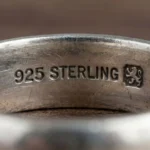
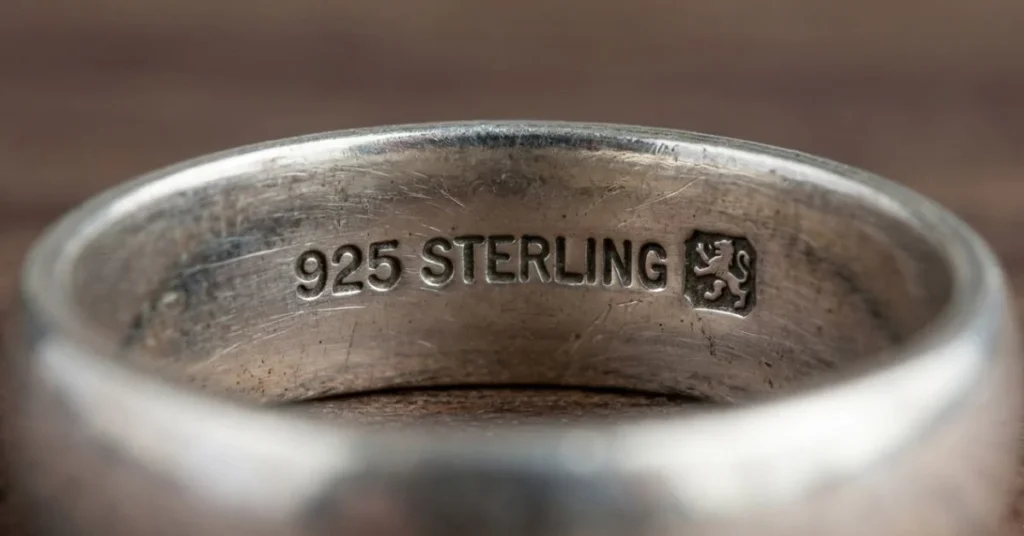
This is the fastest way to learn how to tell if sterling silver is real. Genuine sterling silver is made from 92.5% silver and will typically be marked with a “925” or “sterling” stamp, or sometimes a lion or thistle symbol. Flip the piece over — check the inside of a ring band, the clasp of a bracelet, or the back of a pendant.
But a stamp alone isn’t always proof. In countries like France, Portugal, and the United Kingdom, only a state hallmark affixed by an approved assay body truly certifies fineness — a manufacturer can engrave “925” on its own initiative without that replacing official certification.
If you’re checking antique British silver specifically, the marks get more detailed. British law required multiple marks: a maker’s mark, a standard mark showing purity, an assay office mark showing location, and a date letter showing the year. As of January 1, 2026, the Date Letter for all UK Assay Offices — London, Birmingham, Sheffield, and Edinburgh — is a capital “B”. The lion mark transitioned from facing the viewer to a left-facing profile starting in 1821, making it a reliable dating gatekeeper — a piece claiming 1700s origin with a profile lion is a red flag.
What the stamp tells you:
- 925, .925, or “Sterling” — genuine sterling silver
- 999, .999 — fine silver, too soft for most jewelry
- EPNS, EP, or A1 — silver plate, a thin silver coating over base metal
- No mark at all — possible on very old, provincial, or heavily worn pieces; professional testing like acid testing or XRF can confirm content
Test 2: Don’t Trust the Stamp Alone
Anyone who has handled estate jewelry appraisals knows stamps get forged, worn smooth, or transplanted from a damaged piece onto a fake one. Mismatched lions and date letters are a primary indicator of “Duty Dodger” forgeries — antique marks cut from a damaged item and soldered onto a different, often lower-quality, piece.
This is what surprises most people figuring out how to tell if sterling silver is real versus fake: a confident, clean “925” stamp can still sit on top of base metal. Authenticating silver properly uses hallmark examination together with acid testing and a comparison of weight to known standards — not the hallmark alone.
If a piece matters to you financially, don’t stop at the stamp. UKAS-accredited assay offices operating under ISO/IEC 17025 accreditation provide independent testing results that are recognized and cited by Trading Standards Officers in enforcement proceedings — a meaningfully higher bar than a store’s in-house claim.
Test 3: The Magnet Test
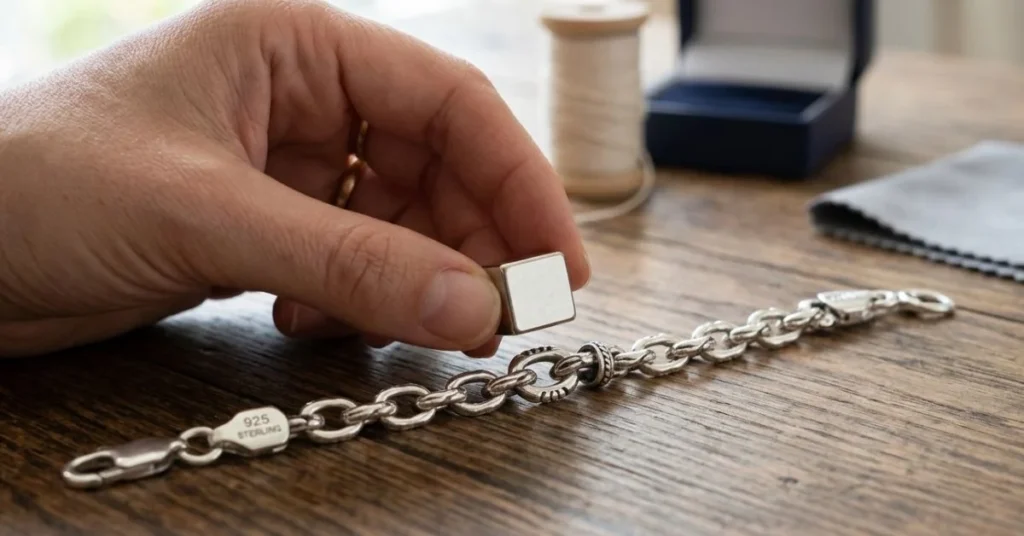
This is the cheapest way to check how to tell if sterling silver is real without spending anything. Sterling silver is mostly silver at 92.5%, mixed with a small amount of copper, and neither metal is magnetic, so if something sticks strongly to a magnet, it’s probably not real sterling silver.
Use a strong magnet, not a weak fridge magnet — those won’t reliably react with anything. Hold it close to the piece without touching.
- No pull at all — passes the magnet test, consistent with sterling silver
- Strong, obvious pull — almost certainly base metal, likely stainless steel or nickel dressed up as silver
One caveat: this test only rules things out. A magnet attraction may mean the piece is made entirely from a different metal, or it could mean the piece is silver-plated over a magnetic base metal. Passing doesn’t confirm sterling on its own — non-magnetic fakes exist too, like aluminum. It just clears the most obvious fakes fast.
Test 4: The Ice Test
Silver is an excellent heat conductor, so a genuine sterling silver item placed on ice at room temperature will melt that ice noticeably faster than most other metals would. Wrap the piece in foil first to create a controlled surface, then set an ice cube on top and watch.
This works because of physics, not magic — silver’s thermal conductivity ranks among the highest of any metal. It’s a strong supporting clue, not a standalone verdict, which is why nobody serious answers how to tell if sterling silver is real using just one test alone.
Test 5: The Sound and Smell Tests
A coin tap test can help too: gently tap the silver item with a coin and listen for a clear, ringing sound, comparing it against a piece you already know is genuine sterling. Plated and base-metal pieces tend to produce a duller, flatter sound.
What people get wrong constantly: assuming a strong metallic smell means real silver. It’s the reverse. Genuine sterling silver does not carry a strong metallic odor — that smell usually signals a fake alloy reacting with skin oils.
Test 6: Weight Comparison
Appraisers working estate sales daily will tell you weight is an underrated tell when figuring out how to tell if sterling silver is real versus plated. Sterling silver runs noticeably heavier than silver plate for items of similar size, because plate is, by definition, a thin shell over something lighter underneath, usually copper or nickel alloy. Hold two similar-looking pieces side by side — the genuine sterling piece will feel denser in the hand.
What People Get Wrong About “Real” vs. “Solid” Silver
Here’s a mix-up we see constantly: people use “real silver” and “solid silver” interchangeably. They’re not the same claim.
Sterling silver is real silver, not fake, but it isn’t solid silver either — a sterling piece typically contains 92.5% pure silver with the remainder made up of base metals, usually copper. Genuine 999 fine silver exists too, but it’s rarely used for everyday jewelry because it’s too soft to hold its shape under normal wear.
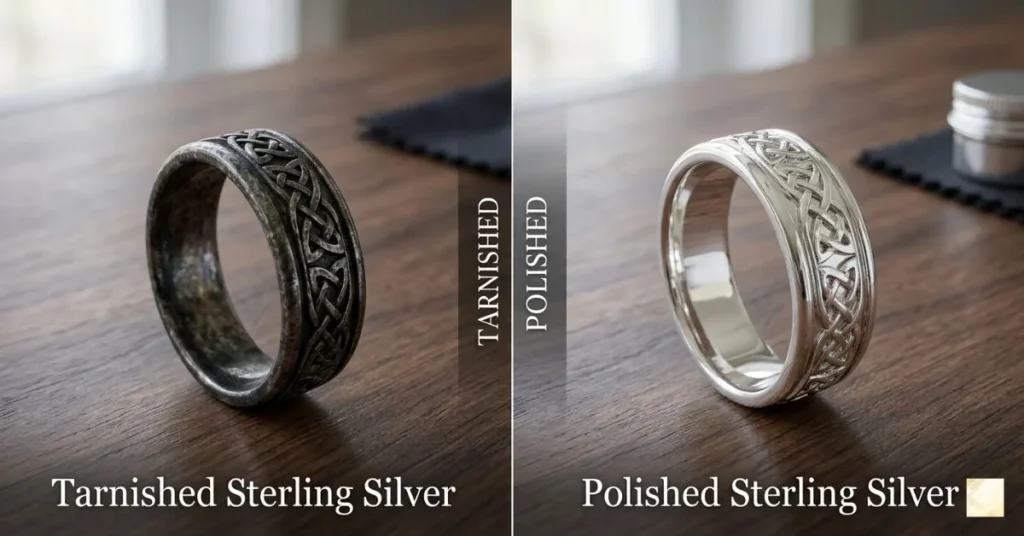
The other confusion: people expect “real” silver to never tarnish, then panic when their ring darkens and assume they got scammed. Sterling silver does tarnish over time, but unlike plated metals, it does not flake or peel — tarnish is actually a sign you likely own genuine sterling, not proof you’ve been sold a fake.
Buyers who have shopped for certified silver pieces know rhodium or ruthenium plating throws an extra wrinkle into this. Sterling silver can be plated with rhodium or ruthenium to stay brighter and resist tarnish longer — it’s still genuine silver underneath, it just won’t darken on the timeline people expect, which confuses buyers who use “does it tarnish” as their go-to test.
When to Stop Testing It Yourself
If the piece is high-value, antique, or sentimental, stop at the home tests. When a piece is valuable, sentimental, or still unclear after basic tests, a jeweler can confirm it quickly using professional methods — the safest option when you want a definite answer.
This matters financially too. Silver plate carries essentially zero melt value, since the silver coating is too thin to recover, while only sterling or “925” silver carries true commodity value based on weight. Paying sterling prices for plated copper is the single most common costly mistake here — and it’s avoidable with a five-minute check before you buy, not after.
Lab-grade methods exist for anyone who wants certainty beyond home testing. ISO 9202 specifies the range of fineness for precious metal alloys, and related standards like ISO 11427 cover the volumetric potentiometric method for determining silver content in jewelry alloys — the kind of lab testing an assay office runs when a stamp isn’t conclusive enough.
For investment-grade purchases or larger collections, always verify metal purity with a certified assayer rather than relying on home tests alone.
Also Read: 1/10 oz Gold Price Today: Real Cost & Hidden Premiums
FAQ
Does real sterling silver always have a 925 stamp?
No. Some genuine antique or handmade pieces lack visible marks due to wear or regional practices, though most modern sterling is stamped 925, .925, or “Sterling.”
Is sterling silver magnetic?
No. Genuine sterling silver does not react to a magnet; if a piece pulls strongly toward one, it’s most likely a base metal rather than real sterling.
Can sterling silver be fake even with a 925 stamp on it?
Stamps can be forged, transplanted from damaged pieces, or applied without official assay certification, so a stamp alone isn’t conclusive proof on valuable items.
Does tarnishing mean my silver is fake?
No. Tarnishing is actually a sign of genuine sterling silver reacting naturally to air; plated or fake metals tend to flake or peel instead of darkening evenly.
Should I use acid testing kits at home?
With caution — acid testing kits can confirm purity, but they can mark the piece slightly, so test an inconspicuous spot or leave valuable items to a professional.