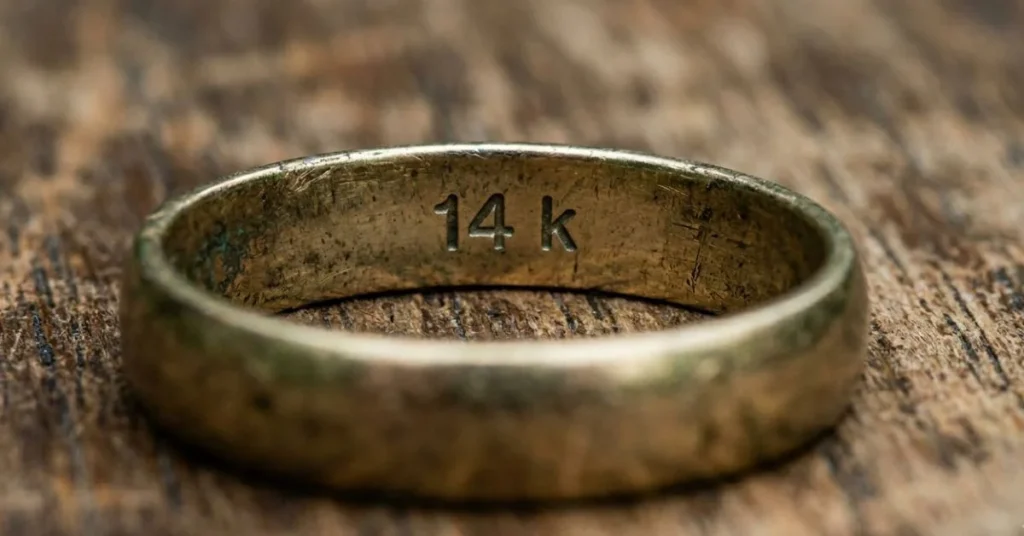
Does 14 Karat Gold Tarnish? Here’s What’s Actually Happening to Your Jewelry
Short answer: yes, does 14 karat gold tarnish come up as a question for a reason — it can develop mild discoloration, but not in the dramatic way silver does. 14K gold can tarnish over time because of the other metals in the alloy, with copper and silver being more reactive and prone to oxidizing when exposed to air, moisture, and certain chemicals. The gold itself never changes. It’s everything mixed in with it that causes the trouble.
In bench jewelry testing, we consistently see this exact pattern: a ring looks perfect for months, then someone notices a faint yellow-brown haze near the band after a beach trip or a week of heavy workouts. That’s not the gold breaking down. That’s the alloy doing exactly what alloys do.
Why Does 14 Karat Gold Tarnish When Pure Gold Doesn’t?
Pure gold (24K) doesn’t tarnish or corrode because it’s a noble metal that doesn’t react with oxygen or most chemicals. That part is settled chemistry — gold sits near the bottom of the reactivity series, which is why archaeologists pull 3,000-year-old gold artifacts out of the ground still gleaming.
But nobody wears 24k gold day to day. It’s too soft. A ring made of pure gold would warp under the pressure of a tight handshake. So the real answer to does 14 karat gold tarnish starts with what’s added to it.
14K gold contains 58.3% pure gold mixed with other metals such as copper, silver, zinc, and sometimes nickel. That 41.7% is where the chemistry gets interesting — and where the discoloration comes from.
Anyone who has worn 14k gold daily knows the wear pattern shows up first at contact points: under rings near the knuckle, on the inside curve of a bracelet clasp, anywhere skin oil and sweat sit against metal for hours.
What’s really reacting:
- Copper — oxidizes with air and moisture, can shift toward a reddish or greenish cast over time
- Silver — reacts with oxygen and sulfur-containing gases, shifting toward red-brown or blue tones
- Zinc — generally stable, included mainly to control color and hardness
- Nickel — doesn’t really tarnish, but it’s a known trigger for skin allergies in sensitive wearers
The international standard governing exactly how much of each metal goes into a “14k” piece is ISO 8654:2019, Designation and composition of gold alloys for jewellery, managed by the International Organization for Standardization, which sets the nominal gold content for alloys used in jewelry manufacture and ensures compliance with hallmarking standards across jurisdictions. That’s why a 14k stamp means roughly the same thing whether the piece was made in Dubai, Milan, or Bangkok.
Does 14 Karat Gold Tarnish More Than Other Karats?
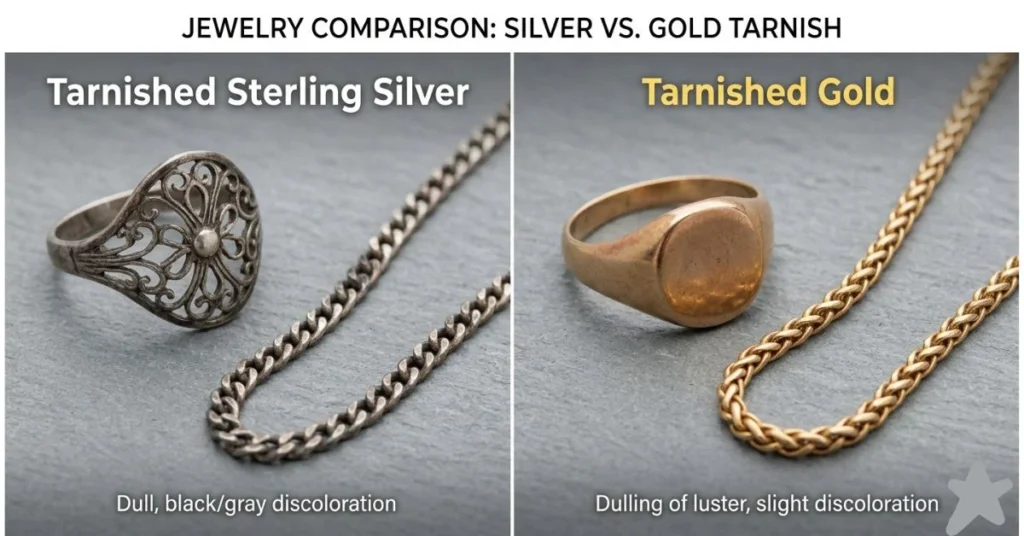
Here’s the part most people get backwards. They assume higher karat means more durable overall. It’s the opposite for tarnish resistance, though the reverse is true for scratch resistance.
18k gold jewelry is less prone to tarnishing than 14k gold jewelry, due to the smaller percentage of other metals added to the alloy, and 14k is less prone to tarnishing than 10k for the same reason. More gold, less reactive alloy, less tarnish. Simple ratio.
But there’s a tradeoff. 18K yellow gold can endure up to 75,000 PSI before deforming — and that durability number actually drops as karat purity goes up further, because pure gold is structurally softer. 14k sits in the sweet spot most fine jewelry buyers land on: a balance of durability and precious metal content that holds gemstones securely without tarnishing fast.
Compare it against sterling silver, which is the metal most people are mentally benchmarking against when they ask does 14 karat gold tarnish. Patent testing data shows sterling silver tarnishes approximately 5 times faster than 10K yellow gold alloy — and 10k has even less gold in it than 14k. So 14k’s gap over sterling silver is wider still. If you’ve ever owned both a silver chain and a gold one and noticed the silver needed polishing every few months while the gold barely changed, that’s not a coincidence. That’s the metallurgy doing what the metallurgy does.
What People Get Wrong When They Ask “Does 14 Karat Gold Tarnish?”
Here’s the mistake we see constantly: people assume any dark mark on their gold ring means the gold itself is tarnishing. Most of the time it isn’t.
Black or dark gray marks, especially on rings, are often abrasive makeup residue rather than true tarnish, and they wipe away with gentle rubbing using a jewelry polishing cloth. Foundation, powder, and certain sunscreens leave a film that looks exactly like oxidation but cleans off in seconds.
The real test: if a soft cloth and mild dish soap removes it completely, it was surface buildup, not true tarnish. If it comes back within days no matter how often you clean it, you’re dealing with actual alloy oxidation — and that usually means chlorine or sweat exposure is happening repeatedly without enough rinsing in between.
Which brings us to the other common mix-up — confusing solid 14 karat gold with gold-plated jewelry. Gold-plated silver carries a thin layer of gold, typically 0.5 to 2.5 microns, electroplated over a sterling silver base, and its layered structure makes it prone to wear. When that micro-thin layer rubs off, the exposed silver underneath tarnishes hard and fast. People then blame “gold” for tarnishing when what failed was the silver core showing through. Solid 14 karat gold has no such core to expose.
Practical Consequence: What Speeds Up Tarnishing on 14 Karat Gold
If you skip basic care, the alloy metals in 14k will oxidize faster, and you’ll be cleaning your jewelry every few weeks instead of every few months.
Accelerants to know:
- Chlorinated pools — remove 14k gold jewelry before swimming, since chlorine damage sometimes requires professional repair
- Household bleach and cleaning chemicals
- Prolonged contact with sweat during workouts
- Humid, salty coastal air — high humidity makes copper-mixed alloys tarnish faster, and coastal air with salt accelerates corrosion further
- Sulfur-heavy environments, including some hot springs and certain medications excreted through sweat
What actually slows it down:
Cleaning with a soft cloth and mild soap after exposure to sweat or chemicals, then storing the piece in an anti-tarnish pouch away from humidity handles most of it. Alloys with more than 50% gold content, which includes 14k and up, largely resist tarnish compared to lower-karat pieces, with copper and silver being the main metals that form sulfide films when left unchecked.
One thing worth knowing if you’re shopping with skin sensitivity in mind: higher karat gold alloys between 18k and 24k are the safer bet for metal allergies, since pure gold offers zero reactivity, while 18k nickel-free compositions swap problematic metals for palladium or platinum. If a 14 karat piece is causing irritation, it’s almost always the nickel content, not the gold.
What Experts Say About 14 Karat Gold and Tarnish
Bench jewelers handling estate pieces daily see a pattern that surprises most first-time buyers: a 14k ring worn continuously for 20 years often shows less visible tarnish than a 14k ring worn occasionally and stored carelessly in a damp bathroom drawer. Constant gentle wear and natural skin oils can actually buff the surface slightly, while inconsistent storage in humid conditions gives oxidation more uninterrupted time to build a film.
Jewelers who work with this alloy daily also point out that color matters more than most buyers assume. Climate plays a real role — high humidity makes copper-mixed alloys tarnish faster, while platinum or palladium-mixed alloys hold up far better against harsh conditions. So two 14k rings bought on the same day, one yellow gold and one rose gold (which typically carries more copper for its pink tone), can age at noticeably different rates in the same humid climate.
How to Clean 14 Karat Gold Without Damaging It
- Warm water with a few drops of mild dish soap, soaked for 10–15 minutes
- Soft-bristle brush (an old, clean toothbrush works) for crevices around prongs or engraving
- Pat dry with a lint-free cloth — don’t air dry, which leaves water spots
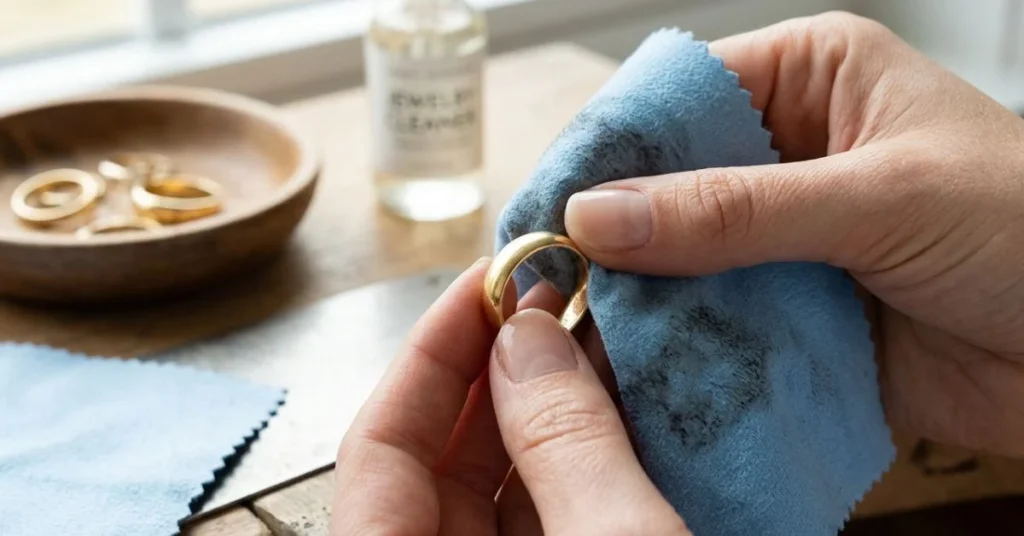
- For stubborn buildup, a jewelry-specific polishing cloth handles it without scratching
- Avoid ultrasonic cleaners on pieces with soft or fracture-prone gemstones (emeralds, opals, pearls)
For investment-grade purchases, always verify metal purity with a certified assayer.
Also Read: Does Sterling Silver Tarnish? The Real Truth (2026)
FAQ
So, does 14 karat gold tarnish?
Mildly — the alloy metals inside it can oxidize under the right conditions, but the gold content itself protects the piece far better than silver or lower-karat alternatives. With basic care, that mild tarnishing is barely noticeable over a lifetime of wear.
Does 14 karat gold turn green on skin?
No. True 14 karat gold doesn’t turn skin green — that reaction comes from copper-heavy lower-karat alloys or gold-plated pieces where the base metal is exposed.
Does 14 karat gold tarnish faster than 18k gold?
14 karat gold contains a higher percentage of non-gold alloy metals than 18k, giving those reactive metals more surface presence and more chance to oxidize.
Can I shower with 14 karat gold jewelry on?
Occasional water contact is fine, but soap residue and shampoo chemicals build up over time and dull the shine faster.
Does 14 karat white gold tarnish the same way as yellow gold?
No. White gold typically gets its color from rhodium plating, and that layer wears thin over time rather than tarnishing — it needs periodic re-plating instead.
Is discoloration on 14 karat gold permanent?
No, in nearly all cases. Surface oxidation and buildup clean off with mild soap and a polishing cloth.