This article is for informational and educational purposes only. It does not constitute financial advice. Always consult a qualified financial advisor before making any investment decisions.
“How much silver should I own?” Ask ten financial professionals and you’ll get ten slightly different numbers — but they cluster around a range that surprises most first-time buyers. Silver’s price action in 2026 has been wild enough that the old rules of thumb deserve a fresh look.
How Much Silver Should I Own According to Experts?
There’s no universal formula, but a clear pattern shows up across financial commentary. Experts typically recommend allocating anywhere from 5% to 15% of a total investment portfolio to precious metals combined, with silver representing a portion of that broader allocation.
Within that range, risk tolerance does the heavy lifting. Conservative investors approaching or in retirement typically allocate 8-12% to total precious metals, with silver comprising 2-4% of the overall portfolio, while more growth-oriented strategies put 10-15% specifically into silver within a broader 15-20% precious metals holding.
Here’s the deal: that’s a fivefold spread between the conservative and aggressive ends. Which means the honest answer to how much silver should I own depends far more on your timeline than on any single “magic number.”
The Gold-to-Silver Ratio Changes the Math
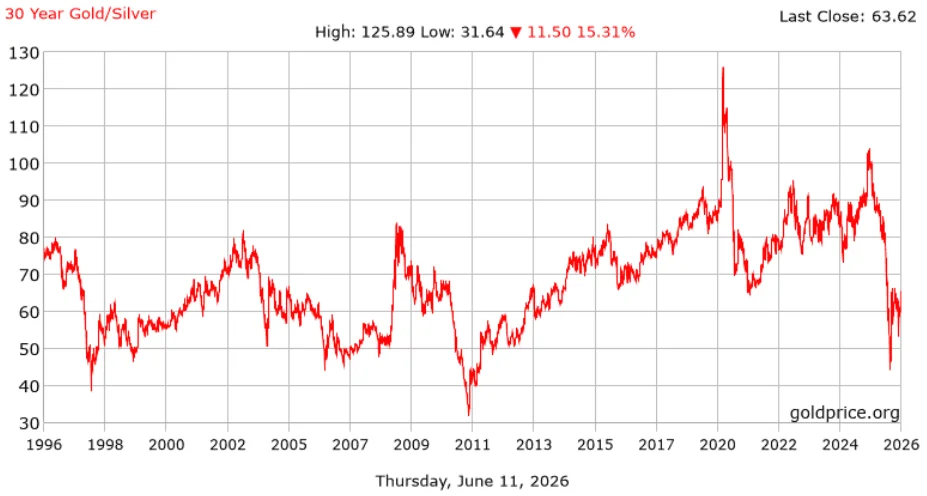
This is the part most beginner guides skip, and it’s exactly where the surprising part comes in. With gold at $4,165 and silver at $65.24 on June 10, 2026, the gold-to-silver ratio sits at approximately 63.9 — up sharply from 55.16 in May and 59.2 in mid-May, meaning silver has cheapened relative to gold.
What people get wrong: they treat the ratio as a side note. It’s actually a timing signal. Historically, a ratio in the 60-70 range has preceded silver outperformance during bull market recoveries, while a ratio above 80 — briefly reached in 2020 — signals a more extreme dislocation.
Earlier in 2026, the picture looked completely different. Silver breached the psychologically important $100 level for the first time in January 2026, pushing the gold-to-silver ratio below 50 — a level last seen in 2012 — before silver declined and formed technical support.
That swing from a sub-50 ratio in January to nearly 64 by June illustrates why “how much silver should I own” isn’t a one-time decision. An 82:1 ratio combined with a sixth consecutive supply deficit and record industrial demand has led independent analysts to publish silver targets as high as $88 before year-end, while other 2026 commentary places the ratio closer to 62-65. The numbers move fast — which is exactly why allocation, not prediction, is the safer framework.
Why Silver Behaves Differently Than Gold
Anyone who has studied gold markets understands silver isn’t just “smaller gold.” It runs on two engines. The monetary engine — real yields, dollar direction, inflation expectations — moves alongside gold, while the industrial engine, covering solar panels, electric vehicles, AI infrastructure, and electronics, follows its own separate cycle and doesn’t pause for Fed decisions.
Approximately 90% of gold demand comes from investment, central bank reserves, and jewelry, according to the World Gold Council. Silver’s demand picture looks nothing like that.
Data center expansion, AI-related technologies, and the automotive sector are expected to support silver consumption in 2026, partially offsetting a decline in solar-related demand, while jewelry demand is projected to fall over 9 percent to 178 million ounces — its lowest level since 2020.
The practical consequence: if you skip understanding this dual demand structure, you’ll misread silver’s price moves. A drop in jewelry demand doesn’t necessarily mean silver weakens — AI infrastructure buildout can offset it entirely.
What People Get Wrong About Silver’s Recent Price Swings
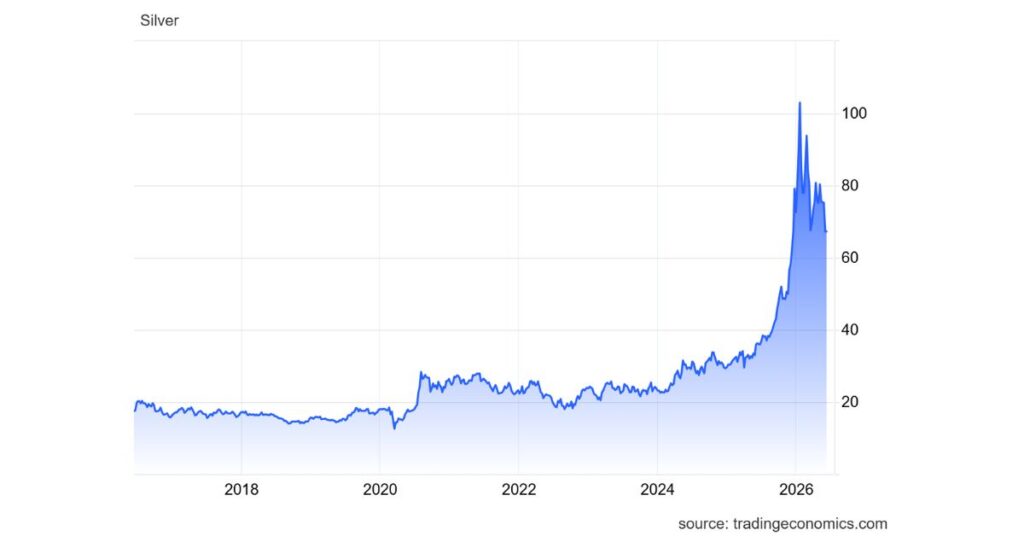
Investors who track gold closely know silver in 2026 has been a roller coaster, not a steady climb. Silver reached an all-time high above $120 per ounce in late January 2026, then experienced a sharp “flash correction” that pulled prices into the low $70s within weeks, before recovering to $86 by late February as Chinese buyers re-entered the market following the Lunar New Year.
That’s a roughly 30% swing in under a month. If your silver allocation was sized assuming low volatility, a move like that could wreck your overall portfolio balance — especially if silver was already a large slice.
And that’s the thing about asking how much silver should I own: the answer needs to survive a 30% drawdown without forcing you to sell at the bottom. Silver’s higher volatility makes it unsuitable as the only precious metal in a portfolio, with most financial planners suggesting holding both gold and silver — gold for stability, silver for growth potential.
What the Research Shows: Allocation by Risk Profile
Breaking this down by approach makes the “how much silver should I own” question more concrete:
- Conservative/retirement-focused: 2% to 4% of total portfolio in silver, often paired with a larger gold allocation to reduce volatility while maintaining inflation protection
- Balanced/moderate: A starting point around 2%, 4%, or 6% depending on personal risk tolerance, according to allocation frameworks from independent financial commentators
- Growth/speculative: An aggressive 15%-20% allocation for investors focused on speculation rather than wealth preservation, since more silver provides more supply to potentially trade for profit
- Ratio-based approach: A common framework recommends roughly 10%-20% of a portfolio in precious metals overall, often split using a 75:25 gold-to-silver ratio
Physical Silver vs. ETFs: Does It Change How Much You Should Own?
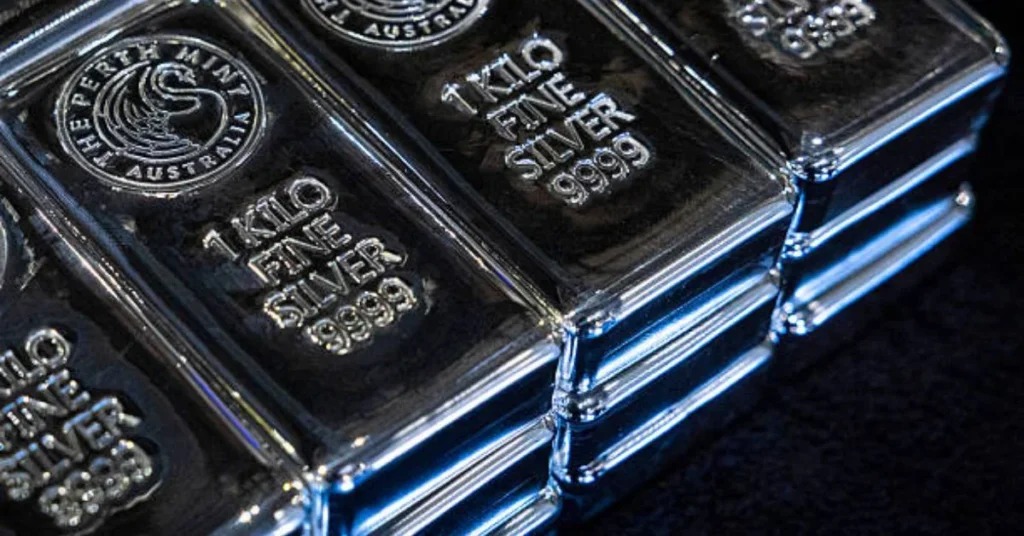
The format you choose affects the practical answer to how much silver should I own, because storage and liquidity constraints are real. Coins offer high liquidity and are easy to trade in small amounts, bars carry lower premiums over spot price meaning more actual silver per dollar, and ETFs let you track and trade silver like a stock without storage hassle.
A counter-intuitive insight: holding silver as ETFs versus physical bars doesn’t change your percentage allocation, but it changes how quickly you can rebalance. During the January-to-February 2026 swing described above, ETF holders could exit within minutes; physical holders faced dealer premiums, shipping delays, and buyback spreads.
For physical bullion, getting a proper invoice and looking for LBMA-approved hallmarks helps guarantee purity — something worth checking regardless of which allocation percentage you land on.
2026 Outlook: What Could Change Your Allocation
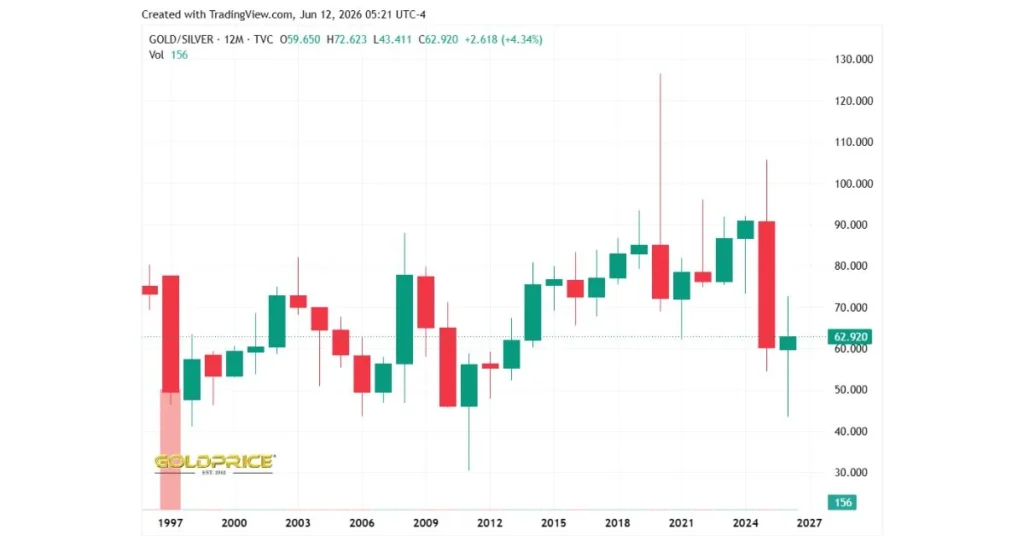
As of 2026, the structural story behind silver hasn’t gone away. After posting its strongest annual performance since 1979, silver set new highs in 2026, with the gold:silver ratio falling below 50 for the first time since 2012 before retreating.
Most analysts project silver to recover toward $90-$106 per ounce by end-2026 from a $68-$71 range, based on a base case involving Fed rate easing, ongoing industrial demand, and a sixth consecutive global supply deficit — though long-range 2030 projections of $180-$220 per ounce carry significant uncertainty. Past performance does not guarantee future results, and these figures are forecasts, not guarantees.
If silver’s industrial demand from data centers and AI infrastructure keeps growing the way 2026 data suggests, the case for holding silver alongside gold — rather than choosing one or the other — gets stronger. Most experienced investors hold both metals, typically weighted toward gold, with the right allocation depending on individual budget, storage situation, and risk tolerance.
Also Read: Silver and Platinum: Which Metal Wins in 2026?
FAQ
Is 5% of my portfolio in silver too much?
No. A 5% silver allocation falls within the range many financial commentators describe for moderate to growth-oriented investors, though it sits above the 2-4% range often suggested for conservative, retirement-focused portfolios.
Does the gold-to-silver ratio tell me when to buy silver?
No single ratio level guarantees a buying opportunity, but a ratio in the 60-70 range has historically preceded periods of silver outperformance during bull market recoveries.
Should I own physical silver or a silver ETF?
Either can fit into your allocation — physical silver suits long-term holders who prioritize tangible assets, while ETFs suit investors who want faster rebalancing and lower storage hassle.
Is silver more volatile than gold?
Silver has shown sharper short-term price swings than gold in 2026, including a move from above $120 to the low $70s within weeks before partially recovering.
Can industrial demand really affect how much silver I should own?
Growth in sectors like AI data centers, electric vehicles, and electronics adds a demand source gold doesn’t have, which is part of why some investors hold a higher silver allocation than they would based on monetary factors alone.
This article is for informational and educational purposes only. It does not constitute financial advice. Always consult a qualified financial advisor before making any investment decisions.