This article is for informational and educational purposes only. It does not constitute financial advice. Always consult a qualified financial advisor before making any investment decisions.
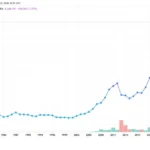
Between January 2025 and January 2026, silver and platinum staged two of the most dramatic rallies in modern precious metals history. Silver surged 147% across 2025 before hitting a nominal all-time high of $121.64 per ounce in January 2026. Platinum, meanwhile, climbed more than 150% from the start of 2025, hitting its first record highs since 2007, according to CME Group economic research published in January 2026. Both metals then corrected hard — and as of June 2026, both are trading well below their January peaks, with silver near $68 per ounce and platinum around $1,760 per ounce.
That correction hasn’t changed the structural case for silver and platinum — it’s clarified it. Investors who understand what actually drives these two metals are now looking at a genuinely different picture than the one that drove the 2025 rally. This article breaks down the fundamentals, the differences, and the honest outlook for both.
Why Silver and Platinum Move Differently — and Why That Matters
On the surface, silver and platinum look like similar assets: both are precious metals, both trade in troy ounces, both serve as portfolio diversifiers, and both ran hard in 2025. Dig deeper and they’re driven by almost entirely different forces.
Peter Boockvar, chief investment officer at OnePoint BFG, notes that silver moves with gold but with more volatility, while platinum and palladium remain more tightly tied to automotive demand. Silver and platinum in particular should benefit from supply and demand characteristics that are expected to continue in 2026.
Silver’s demand is exceptionally broad. It’s monetary (like gold), industrial (like copper), and increasingly technological — used in solar panels, electric vehicles, AI data centers, and 5G infrastructure. That combination of drivers means silver rarely experiences a true demand vacuum. When investment demand cools, industrial demand holds the floor.
Platinum’s demand picture is narrower but structurally compelling. Over 40% of global platinum demand comes from the automotive sector, where it functions as a catalyst in catalytic converters to reduce harmful emissions. Platinum is also a primary catalyst used in proton exchange membrane (PEM) fuel cells and electrolyzers — key technologies in the clean-energy strategies of the United States, Europe, and China. Hydrogen is platinum’s long-term growth story, and it’s one that’s only just beginning to show up in demand data.
The practical consequence for investors holding silver and platinum together: the two metals often diverge in response to the same macro event. A Fed rate hike might cool silver’s investment demand while leaving platinum’s autocatalyst demand untouched. A Chinese economic slowdown could reduce platinum’s industrial orders while silver’s solar-driven demand holds firm. That divergence is actually an argument for holding both rather than choosing one.
Silver in 2026: Record Highs, Sharp Correction, Structural Case Intact
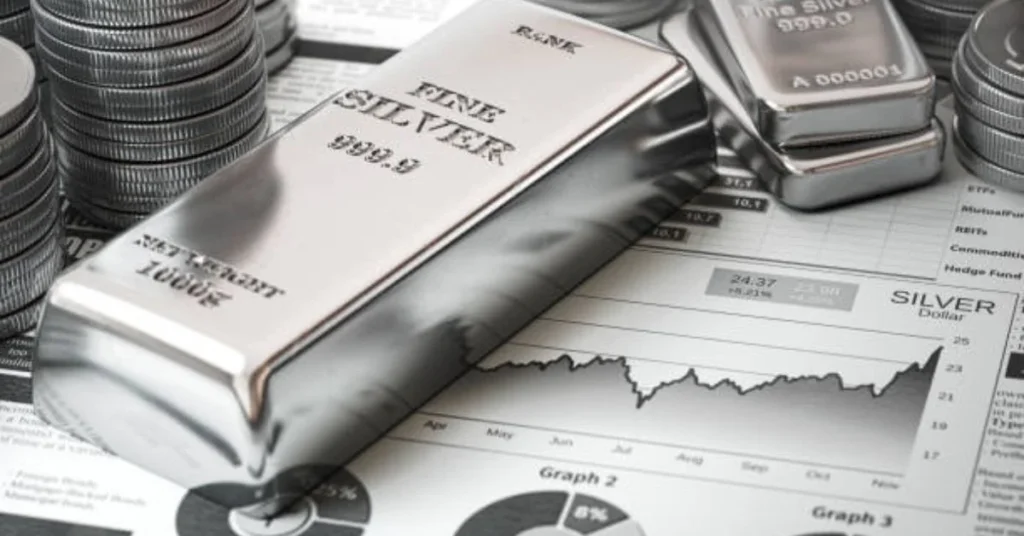
The silver side of the silver and platinum story has been defined by extremes in 2026. Silver hit $121.64 in January — a level that shocked even the most bullish analysts — then corrected sharply to the mid-$60s as the dollar strengthened and rate expectations shifted. Current institutional forecasts average around $79–$81 per ounce for silver in 2026, according to J.P. Morgan and the LBMA consensus, consistent with historical patterns where silver consolidates after a major breakout before resuming its trend.
The industrial demand story behind silver is genuinely historic. Silver’s industrial consumption hit 680.5 million ounces in 2024 — a record high for the fourth consecutive year — representing 59% of total silver demand, up from roughly 40% just two decades ago.
Three specific technology sectors are driving that number relentlessly higher. Solar panels account for the largest single industrial use: in 2014, the solar sector accounted for around 11% of silver demand. By 2024, that figure had risen to 29%. Electric vehicles add further pressure — modern EVs incorporate three times the silver content of conventional vehicles, while solar panels remain highly reliant on silver paste for electrical efficiency. And AI data centers have emerged as an entirely new demand source: the Silver Institute estimates that total global IT power capacity increased approximately 53 times — from 0.93 GW in 2000 to nearly 50 GW in 2025 — and the link to silver consumption is direct and growing.
According to the Silver Institute’s December 2025 report, solar energy, automotive EVs, and data centers and artificial intelligence will drive global silver industrial demand higher through 2030.
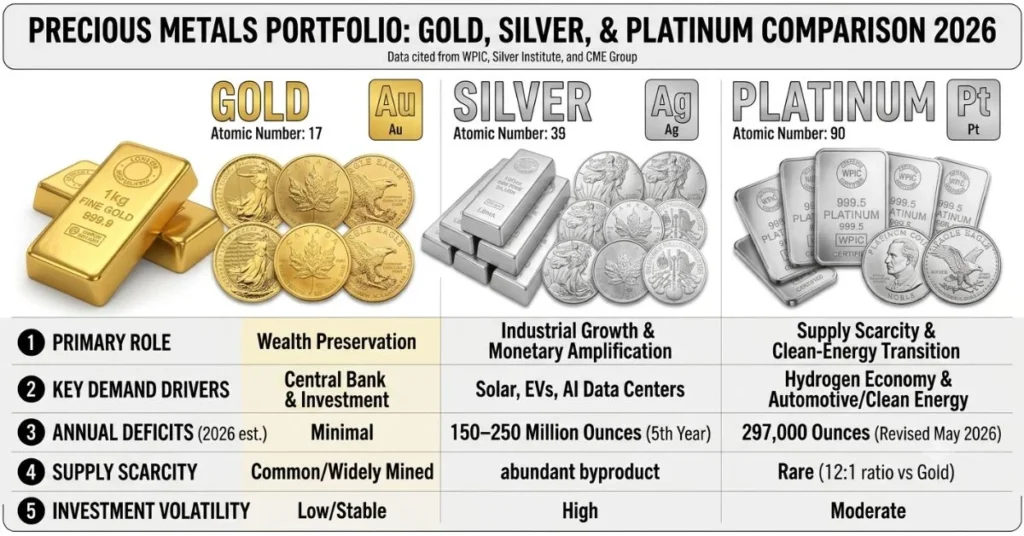
Supply hasn’t kept pace with any of this. The Silver Institute has reported silver market deficits — where demand exceeds mine production plus recycling — for five consecutive years as of early 2026, with annual shortfalls ranging from 150–250 million ounces, steadily drawing down aboveground stockpiles. What people get wrong about silver as part of a silver and platinum portfolio is assuming that higher prices will quickly solve the supply gap. New silver mines take years to permit and build. The substitution ceiling has already been largely squeezed out — silver content per solar cell has dropped from 200mg per watt in 2009 to roughly 75–100mg today, and further thrifting faces physical limits. Industrial demand projections from the Silver Institute point toward 950–1,050 million ounces by 2030, at which point industrial offtake alone could consume 90–100% of total annual silver supply.
That supply-demand math is the most important long-term variable for anyone evaluating silver and platinum as an investment pair.
Platinum in 2026: Four Consecutive Deficits and a Hydrogen Wildcard
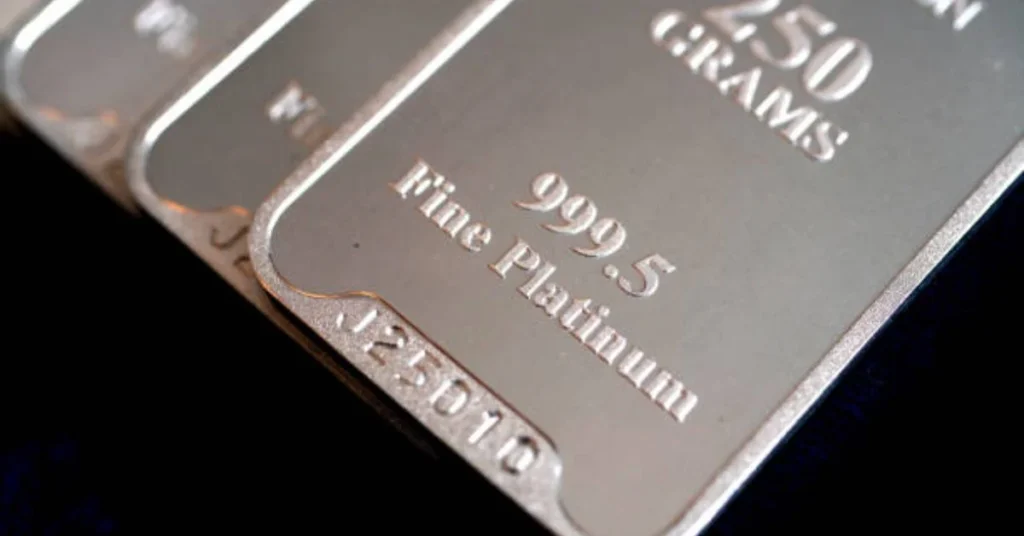
The platinum half of the silver and platinum story is being driven by a supply deficit more severe than most investors realize.
The World Platinum Investment Council announced in March 2026 that the platinum market faces a fourth consecutive annual supply deficit in 2026 — a 240,000-ounce shortfall following the deepest deficit in the WPIC’s data series: a 1,082,000-ounce shortfall recorded in 2025.
The WPIC’s Q1 2026 Platinum Quarterly, released May 19, 2026, subsequently revised that deficit estimate upward to 297,000 ounces — 57,000 ounces larger than the prior forecast. Above-ground platinum stocks have now fallen to roughly four months of global demand coverage, the tightest physical supply buffer in recent history.
Supply concentration makes this deficit particularly difficult to resolve. South Africa, Russia, and Zimbabwe control approximately 90% of primary platinum supply globally, while Q1 2026 production declines at Norilsk Nickel and Zimplats increased geopolitical and operational supply risk. Electricity shortages, aging ore bodies, and rising extraction costs in South Africa — the dominant producer — have repeatedly prevented supply from recovering to pre-pandemic levels.
Investors who track silver and platinum closely know that platinum’s investment case has a specific counter-intuitive element: its price remains significantly below gold despite platinum being far rarer. For every ounce of platinum mined, nearly 12 ounces of gold are extracted globally. Yet platinum currently trades at roughly $1,760 per ounce against gold’s $4,800+ — a ratio of about 2.7:1 in gold’s favour. The gold-platinum ratio was historically mostly below 1, meaning platinum was more expensive than gold, but has been permanently above 1 since 2015 — a structural shift caused by the diesel scandal and declining catalytic converter demand. That historical relationship makes platinum’s current discount to gold appear anomalous on a long enough timeframe.
The hydrogen economy represents platinum’s most significant long-term demand catalyst. The WPIC forecasts hydrogen-related platinum uptake to increase by 875,000–900,000 ounces by 2030, driven by fuel cell electric vehicles for heavy-duty trucks and buses, green hydrogen electrolyzers, and stationary backup power facilities. As of mid-2026, the WPIC estimates platinum demand tied to the hydrogen economy at roughly 90,000 ounces annually — still a small share of total demand, but growing on a trajectory that could reshape the market by the end of the decade.
What the Research Shows: How Silver and Platinum Behave in a Portfolio
Silver and platinum serve different functions in a precious metals allocation, and understanding that difference prevents the mistake of treating them as interchangeable.
Industrial market conditions greatly influence the prices of both silver and platinum. Platinum prices can be more volatile due to its concentrated industrial dependency, whereas silver tends to show steadier demand thanks to its broader range of applications.
Silver correlates more closely with gold in monetary stress environments. When geopolitical risk spikes or the dollar weakens, silver tends to amplify gold’s move — historically by 2–3x. The 2019–2020 Fed easing cycle sent silver from $14 to $29. The 2025 easing cycle — which carried into silver’s January 2026 peak — sent it from around $29 to $121. Each time real yields compressed, silver amplified gold’s move significantly.
Platinum is more sensitive to economic cycle and industrial output. During recessions, automotive production slows and platinum demand contracts. During recoveries — particularly ones driven by green infrastructure build-out — platinum demand accelerates. The WPIC projects total bar and coin investment demand for platinum to jump 35% to 725,000 ounces in 2026, with gains expected across all markets and India emerging as a new growth market.
CME Group economic research notes that the value of gold mining output exceeds that of silver by roughly 6.5 times and that of platinum and palladium by around 35 times at early 2026 prices. This means even modest rotation of gold investor capital into silver and platinum can have an outsized price impact on those smaller markets. A small allocation shift from gold pushes silver and platinum prices proportionally much harder than it moves gold itself.
Silver and Platinum vs. Gold: The Honest Comparison
Gold is the anchor. Silver and platinum are the amplifiers — with the upside and downside that implies.
Gold’s primary function is wealth preservation: it has low volatility relative to other precious metals, trades with enormous liquidity, and holds its purchasing power over multi-decade periods. Silver adds industrial demand exposure gold doesn’t have. Platinum adds scarcity and clean-energy optionality gold doesn’t have.
The gold-to-silver ratio sits at approximately 61–62:1 as of May 2026, within the historical average range of 60:1 to 80:1 — neither a strong buy signal for silver nor a clear sell. The ratio peaked at 127:1 in March 2020, the highest in modern records, before compressing as silver’s industrial and monetary demand converged.
For investors deciding how to allocate between silver and platinum, the key variables are time horizon and risk tolerance. Silver’s industrial demand drivers are well-established and growing — solar, EVs, AI infrastructure all have long runways. Platinum’s hydrogen demand story has longer to mature, but the supply deficit case is live right now and structural. One institutional view from Olive Resource Capital positions platinum as the top precious metals pick for 2026, citing persistent market deficits, tight physical supply, and anticipated rollbacks of aggressive EV mandates that sustain internal combustion engine production and autocatalyst demand.
Is Silver and Platinum Worth Holding Together?
Yes — and most experienced precious metals investors already do. The two metals have different enough demand profiles that they rarely underperform simultaneously, and their combined exposure covers the monetary, industrial, and clean-energy dimensions of a diversified precious metals position.
Silver and platinum held alongside gold gives a portfolio three distinct risk/return profiles: gold for stability and central-bank demand tailwinds, silver for industrial growth and monetary amplification, and platinum for supply scarcity and the long-run hydrogen transition. No single metal covers all three.
As of 2026, both metals have corrected meaningfully from their January peaks. Silver trades well below its $121.64 all-time high. Platinum trades near $1,760 against a February 2026 peak above $2,900. The structural supply deficits that drove both rallies haven’t resolved — they’ve deepened. That combination — lower prices, unchanged or worsening supply fundamentals — is precisely the environment where investors who understand silver and platinum begin paying closer attention.
Past performance does not guarantee future results.
Also Read: White Gold vs Gold Value: The Real Difference Explained
FAQ
1. Is silver and platinum a good investment in 2026?
Both metals carry strong structural cases in 2026. Silver faces a fifth consecutive supply deficit with industrial demand from solar, EVs, and AI data centers hitting record levels. Platinum faces its fourth consecutive supply deficit of 297,000 ounces according to the WPIC’s May 2026 Platinum Quarterly report.
2. Which is better to buy — silver or platinum?
No single answer fits every investor. Silver offers higher volatility and stronger industrial demand breadth, with J.P. Morgan and the LBMA consensus forecasting $79–$81 per ounce for 2026. Platinum offers greater scarcity — 12 ounces of gold are mined for every one ounce of platinum — and a growing hydrogen economy demand story. Most experienced precious metals investors hold both.
3. Why did silver and platinum prices drop after January 2026?
Silver corrected from its $121.64 all-time high as the US dollar strengthened and sticky inflation data pushed back Fed rate cut expectations. Platinum dropped from above $2,900 to near $1,760 as Federal Reserve repricing toward zero 2026 rate cuts temporarily outweighed bullish supply fundamentals — a pattern documented by Metals Focus and the WPIC in Q1 2026.
4. Does platinum have a future given the shift to electric vehicles?
While EV growth reduces traditional autocatalyst demand, platinum plays a key role in hydrogen fuel cell technology — an entirely new demand category. The WPIC forecasts hydrogen-related platinum demand to increase by 875,000–900,000 ounces by 2030, partially offsetting any automotive sector decline.
5. What is the gold-to-silver ratio telling investors in 2026?
At approximately 61–62:1 as of May 2026, the ratio sits within the long-term historical average of 60:1 to 80:1 — neither a strong buy signal for silver nor a clear sell. The ratio peaked at 127:1 in March 2020, its highest in modern records. At current levels, neither metal appears dramatically cheap or expensive relative to the other.
This article is for informational and educational purposes only. It does not constitute financial advice. Always consult a qualified financial advisor before making any investment decisions.