This article is for informational and educational purposes only. It does not constitute financial advice. Always consult a qualified financial advisor before making any investment decisions.
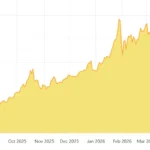
Is gold jewelry a good investment — or is it one of the most expensive ways to own gold? That question matters more in 2026 than it ever has. Gold hit an all-time spot price high of $5,589.38 per troy ounce on January 28, 2026, according to data published by Investing News Network. With prices at record levels, millions of buyers are walking into jewelry stores believing they’re making a financially sound move. Many of them are wrong.
The answer depends on what you’re buying, what you’re paying above melt value, and whether you’ll ever need to sell.
Why Most People Get “Is Gold Jewelry a Good Investment” Wrong From the Start
Walk into any retail jeweler — Tiffany, Zales, Macy’s — and the price tag includes far more than gold. Most jewelers mark up their pieces by 300–500% without showing buyers what they’re actually paying for. High-luxury brands like Bulgari, Cartier, and Tiffany can charge markups exceeding 1,000%.
That markup isn’t purely craftsmanship. A large chunk covers retail overhead, brand positioning, labor, stone settings, and profit margin. For a solid gold ring, gold material may represent only 30% to 50% of the final price, with labor comprising another 20% to 40%. The rest has nothing to do with the spot price of gold.
Here’s the practical consequence that makes investing in gold jewelry so complicated: when you try to sell, buyers pay for the metal — not the artistry. Selling jewelry often involves high markups and discounts, with buyers typically offering 60–80% of the gold’s spot price. You paid 300–500% above melt value on the way in. You’ll recover 60–80% of melt value on the way out. That gap is not an investment return — it’s a structural loss built into every retail purchase.
Anyone who has studied gold markets understands this reality. It doesn’t make gold jewelry worthless as a wealth vehicle. It means the question of whether gold jewelry is a good investment can only be answered once you understand what you’re actually paying for.
What the Research Shows About Gold Jewelry as an Investment in 2026
The World Gold Council’s Q1 2026 Gold Demand Trends report, published April 29, 2026, tells a revealing story about the current market. The LBMA Gold Price (PM) set a new quarterly average record of $4,873 per troy ounce during Q1. Jewellery demand volumes dropped 23% year-on-year, while the value of spending on jewelry still rose 31%.
That split — lower volume, higher spending — signals that buyers are paying more per piece not because they’re getting more gold, but because retail prices have climbed with spot prices. Louise Street, Senior Markets Analyst at the World Gold Council, noted that gold’s volatility markedly increased in 2026, with prices peaking above $5,400/oz in January before a significant but contained correction.
Here’s the counter-intuitive part: rising gold prices don’t automatically make gold jewelry a better investment. They make the underlying metal more valuable — but they also give retailers cover to charge higher premiums on already-inflated pieces. Bar and coin demand reached 474 tonnes in Q1 2026, the second-highest quarter on record, with investment demand far exceeding fabrication demand. Professional investors aren’t buying gold through jewelry. They’re buying bars and coins, priced close to spot. That contrast matters when you’re evaluating whether gold jewelry is a good investment for your own portfolio.
Karat Purity: The Factor That Determines Whether Gold Jewelry Holds Investment Value
Not all gold jewelry is equally worth holding as an asset. Karat purity is the single biggest variable when evaluating gold jewelry as an investment — and most retail buyers ignore it entirely.
For 22-karat gold, which contains 91.67% gold, buyers receive more than 90 cents of gold value for every dollar of gold content. Many traditional jewelry cultures favor 22-karat because it balances investment value with practical wearability. By contrast, 10-karat gold contains only 41.7% pure gold — you’re primarily paying for alloy metals, and the resale value reflects that gap.
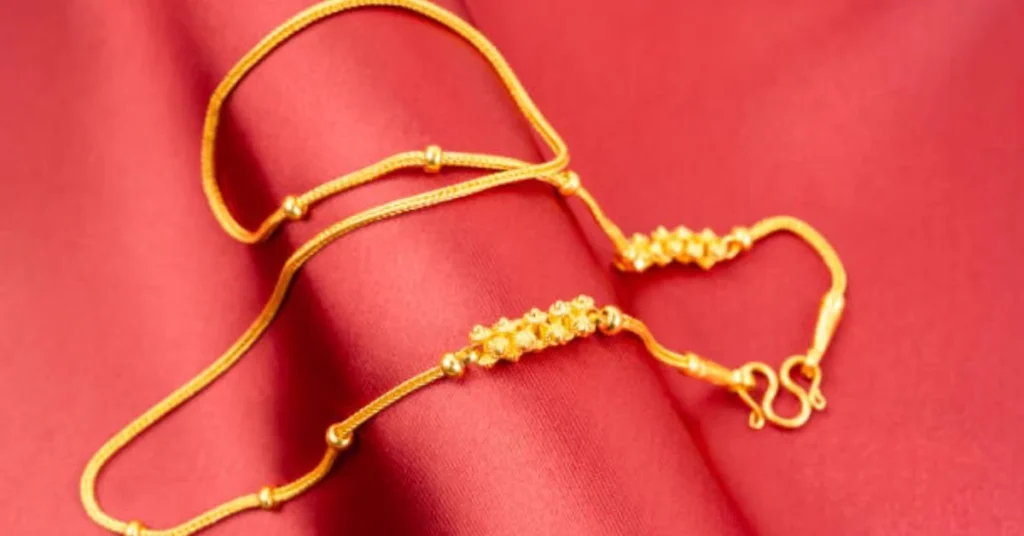
24-karat pieces, the purest form at 99.5% gold, offer the closest equivalent to buying bullion in wearable form. The counterargument — that 24K gold is too soft for daily wear — is largely a retail myth designed to sell lower-purity pieces. Billions of people across Asia have worn 24K gold jewelry for centuries as both adornment and investment.
Plain, heavy pieces also dramatically outperform decorative ones when the goal is investing in gold jewelry for value retention. Matt Harris, a consignment jewelry and gem expert at Curated Fine Jewelry, recommends plain gold pieces such as chains, rings, and bracelets for buyers with investment intent. Intricate designs carry making charges that are essentially non-refundable. Making charges — whether fixed per gram or calculated as a percentage of gold value — are generally non-refundable at resale. Pay for complexity on the way in, and you absorb that cost completely on the way out.
Gold Jewelry vs. Gold Bullion: An Honest Investment Comparison
This comparison is the one most jewelry buyers actively avoid — probably because the numbers are uncomfortable.
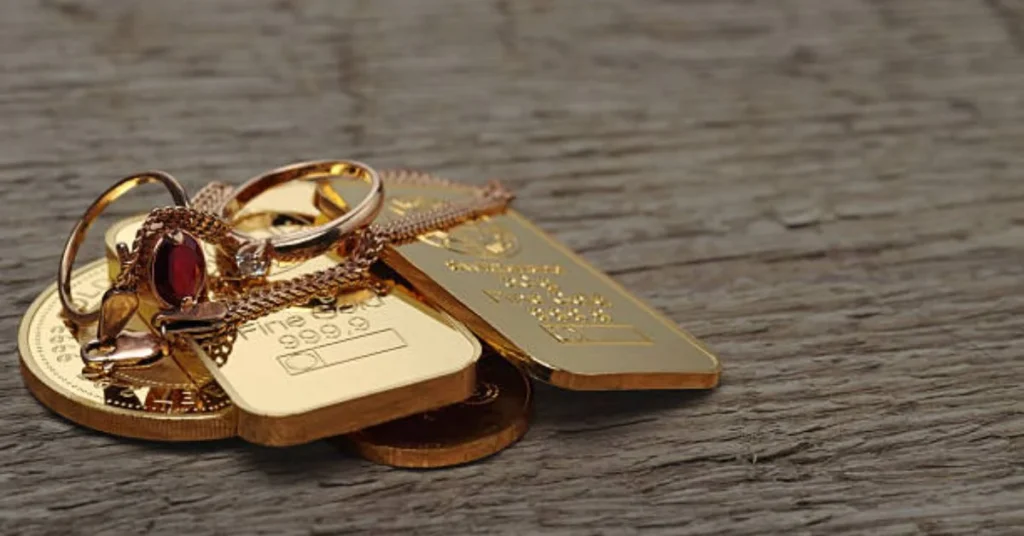
A gold bar or coin bought through a licensed dealer carries a premium of roughly 2–8% above the LBMA London Fix spot price. A gold chain bought at a retail jewelry store carries a premium of 200–500%. With average markups exceeding 250%, consumers transfer billions in wealth to retailers through inflated pricing.
So is gold jewelry a good investment compared to bullion? For pure return potential, no. Gold bullion offers superior pure investment returns due to minimal premiums, and jewelry provides the unique advantage of being worn and enjoyed whilst still retaining intrinsic metal value. That dual-use nature is the honest case for gold jewelry as an investment — not that it will outperform a bar, but that it serves a function bullion can’t: it’s wearable, portable, and in many cultures carries immediate social and liquidity value.
There’s also a tax dimension most buyers overlook. The IRS classifies gold jewelry as a collectible investment, meaning long-term capital gains may be taxed at rates up to 28% — higher than the 15–20% long-term rate that may apply to certain bullion products and gold ETFs. That’s a meaningful drag on net returns that doesn’t apply to every form of gold ownership. Before deciding whether gold jewelry is a good investment for your specific situation, this tax treatment deserves serious consideration.
When Buying Gold Jewelry as an Investment Actually Makes Sense
The answer isn’t never. It’s conditional. Investing in gold jewelry can make rational sense under specific circumstances that most retail buyers never create for themselves.
Buy below retail. Estate sales, auction houses, private sellers, and pawnbrokers often price jewelry closer to melt value — sometimes at 90–110% of spot. That entry point completely changes the math on whether gold jewelry is a good investment for you. The structural loss only exists if you pay full retail.
Target brand value alongside metal value. Jewelry from luxury brands such as Cartier can sell for more than 100% of its original purchase price on platforms like eBay. Pieces featuring high-quality diamonds or vintage items in pristine condition often command premiums beyond their gold content. The reverse is equally true — broken, worn, or outdated pieces may sell for scrap value only.
Hold long-term. Gold’s price trajectory over two decades has rewarded patient holders. Over roughly two decades, gold prices rose from around ₹6,300 per 10 grams in 2004 to more than ₹78,000 in 2024, reflecting long-term growth approaching 13–14% annual returns. If you’re holding high-karat plain gold jewelry for 10–15 years, the underlying metal appreciation can overcome the initial premium paid at purchase.
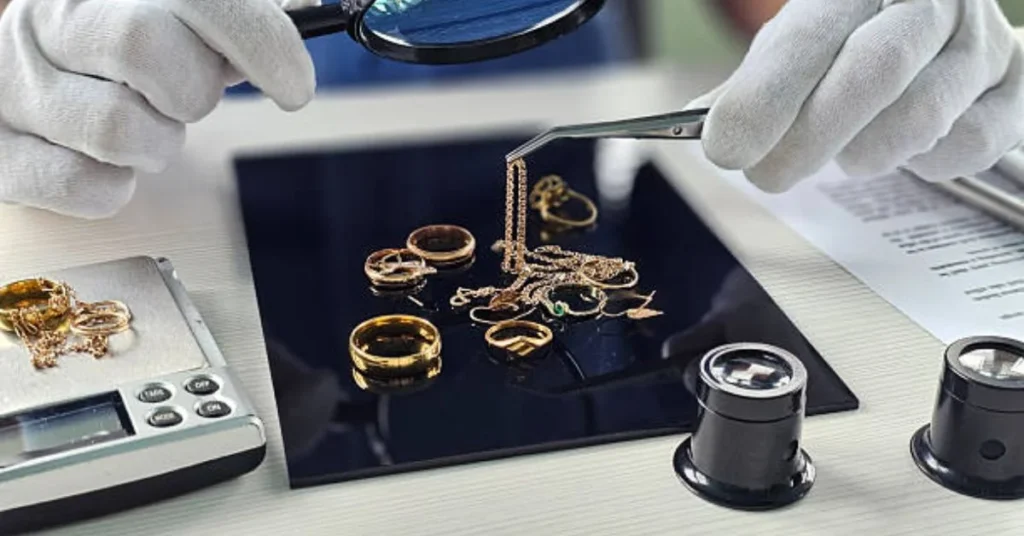
Know the melt value before you buy. Calculate the spot price value of the actual gold in the piece — weight in grams, multiplied by purity percentage, multiplied by current spot price per gram. If the retail price is more than 1.5–2x that figure for a plain piece, the investment case weakens significantly. This calculation is the most practical tool for anyone evaluating whether gold jewelry is a good investment before spending.
Is Gold Jewelry a Good Investment? The Honest Verdict
Gold jewelry is a good investment only when bought strategically — never when bought impulsively at full retail markup for investment reasons alone.
The gold itself is a sound asset. J.P. Morgan’s Global Research team is forecasting gold prices to average $5,055/oz by the final quarter of 2026, with prices expected to push toward $5,400/oz by end of 2027. The metal’s long-term case is well-supported by central bank demand, geopolitical risk premiums, and structural dollar weakness. Jewellery demand will remain under pressure for similar reasons in 2026, though spending will likely remain resilient.
What the data keeps showing is that gold jewelry as an investment vehicle serves a different purpose than bullion. It’s a store of wealth for buyers who want tangible, wearable gold — not a return-maximizing instrument. If you prioritize karat purity, buy by weight, pay below retail where possible, and hold for the long term, investing in gold jewelry can preserve and grow real wealth. If you walk into a mall jeweler expecting the necklace to outperform a gold ETF, the numbers won’t support that expectation.
As of 2026, the case for owning gold in some form is stronger than ever. The form it takes — jewelry, bars, coins, ETFs — should match your purpose, not just your preference.
Past performance does not guarantee future results.
Also Read: Is Now a Good Time to Sell Gold? What the Data Says
FAQ
1. Is gold jewelry a good investment for beginners?
But only with the right approach. Beginners should prioritize 22-karat or 24-karat plain pieces bought at or near melt value, and avoid intricate designs with high making charges that won’t be recoverable at resale.
2. Does gold jewelry increase in value over time?
The gold content does — the LBMA Gold Price averaged $4,873/oz in Q1 2026 per the World Gold Council, up significantly from prior years. The craftsmanship premium paid at retail, however, is rarely recovered on resale.
3. Is gold jewelry a better investment than gold bars?
Gold bars carry premiums of 2–8% over spot price versus 200–500% for retail jewelry. For maximum investment return, bullion consistently outperforms jewelry on the buy-sell spread alone.
4. What karat gold jewelry holds the most investment value?
22-karat (91.67% pure) and 24-karat (99.5% pure) gold pieces hold the most metal value relative to purchase price. 10-karat and 14-karat pieces contain too much alloy metal to serve efficiently as investment-grade holdings.
5. Can you lose money buying gold jewelry as an investment?
Buying at full retail markup and selling within a short timeframe almost always results in a loss, since resale buyers typically offer 60–80% of the gold’s current melt value — well below the 300–500% premium paid at retail.
This article is for informational and educational purposes only. It does not constitute financial advice. Always consult a qualified financial advisor before making any investment decisions.