This article is for informational and educational purposes only. It does not constitute financial advice. Always consult a qualified financial advisor before making any investment decisions.
Gold gained more than 60% in 2025, based on the LBMA Gold Price as of 28 November 2025, marking one of its strongest runs in decades. If you’ve watched that climb from the sidelines, you might be wondering whether it still makes sense to invest in gold in 2026, or whether the easy money has already been made. Here’s the short version: most of the structural 10 reasons people invest in gold weren’t created by last year’s rally, and they haven’t gone anywhere. Central banks are still buying. Inflation hasn’t disappeared. And the world looks less stable, not more.
Below are 10 reasons to invest in gold, each tied to a real number, a named source, and a consequence that actually affects your portfolio.
Reasons 1 & 2: Central Banks Are Buying Gold at a Pace That Changes the Floor Price
Here’s the deal. When the biggest buyers in any market start stockpiling, prices tend to find a higher floor. That’s effectively what’s happening with gold right now.
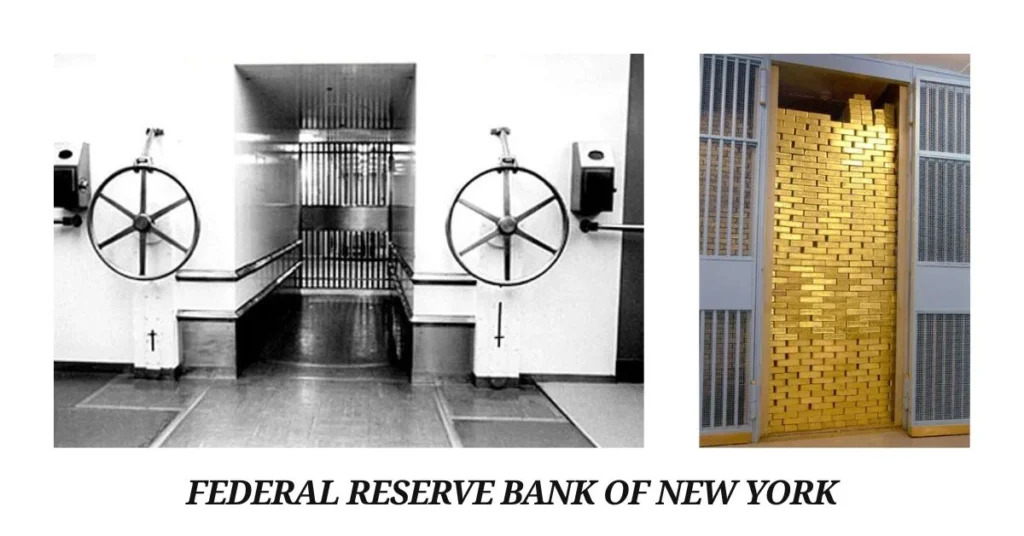
1. Central banks are net buyers on a historic scale. The World Gold Council’s 2026 outlook found that 95% of central banks surveyed expect their gold reserves to grow over the next 12 months, the highest share ever recorded in the WGC’s annual survey, while 43% said they personally plan to add to reserves, also a record. From 2021 to 2025, central bank gold purchases averaged 225 tons per quarter, roughly double the pace from 2016 to 2020, according to J.P. Morgan Global Research.
What this means if you invest in gold: official-sector demand acts like price support that doesn’t depend on retail sentiment. When everyday investors get nervous and sell, central banks usually aren’t selling alongside them.
2. The buying isn’t a straight line, and that’s the part most lists skip. In the first quarter of 2026, central banks were actually net sellers of 129 tons, headlined by Türkiye’s sale of 60 tons in March. The long-term trend points up. The path has bumps. If you’re timing entries around “central banks always buy,” you’ll be wrong some quarters, and that’s worth knowing before you commit money.
The Real Reasons People Invest in Gold When Inflation Won’t Slow Down
Inflation protection is the reason most people have heard of. It’s also more complicated than the marketing suggests.
3. Gold has a long history of preserving purchasing power over long stretches, even when it’s bumpy year to year. During the inflationary period of the 1970s, gold moved from around $35 an ounce to over $800 by 1980 as investors fled a currency they no longer trusted. Past performance does not guarantee future results, but that pattern (gold doing its best work precisely when paper assets struggle) has repeated across multiple cycles.
4. Gold gives you a way to hold wealth outside any single country’s monetary policy. That’s part of why institutions track gold demand across dozens of countries instead of just one. The practical consequence for an individual investor is simple. If you invest in gold, part of your savings stops being a direct bet on what one central bank, say the Federal Reserve, decides to do with rates next.
Here’s the part most articles leave out. Gold’s inflation-hedge reputation works best over long horizons. From 1980 through 2000, gold actually fell nearly 60% even as the Federal Reserve ushered in lower, more stable inflation. Time horizon changes everything.
Reasons 5 & 6: What Actually Happens to Gold When the Stock Market Crashes
This is where a lot of investors get the story wrong.
5. Gold has historically zigged when stocks zagged, though not always immediately. During the 2008 financial crisis, the S&P 500 lost 37% for the year while gold finished 2008 with a positive return of about 5.8%. By 2011, gold had climbed above $1,900 an ounce. During the 1973 to 1975 recession, equities fell 48% while gold appreciated sharply over the same stretch.
6. Gold doesn’t always rise the moment a crash starts, and that catches people off guard. In March 2020, as the S&P 500 cratered during the early COVID selloff, gold initially dropped by roughly 15% before finishing the year up about 25%. Investors who track gold closely know this lag is common during liquidity crunches, when everything gets sold at once to raise cash. The practical consequence: if you invest in gold expecting it to instantly offset a crash on day one, you might be disappointed for a few weeks. The benefit tends to show up over the following months, not the following hours.
Reasons 7 & 8: No Counterparty, No Middleman, and No Default Risk
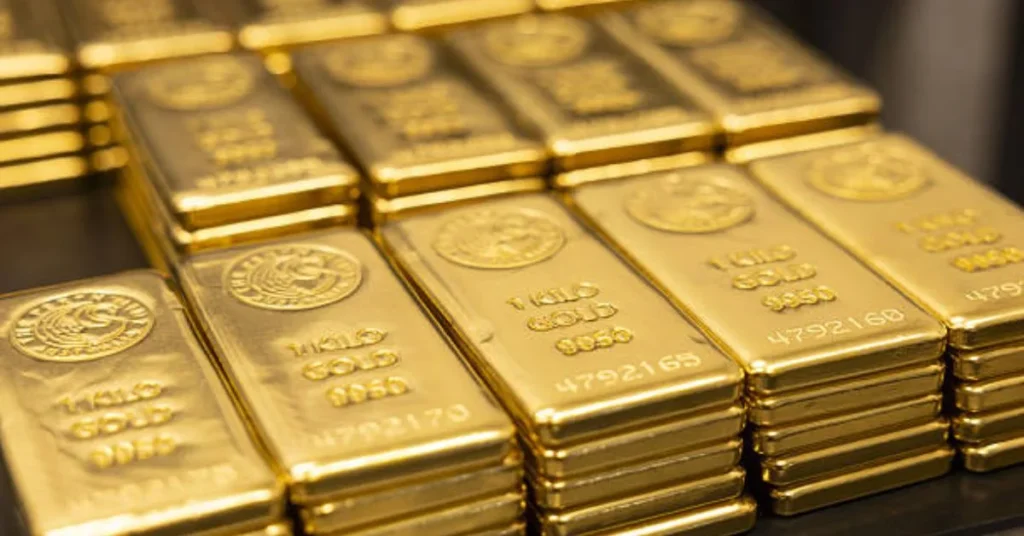
7. Physical gold doesn’t rely on anyone else keeping a promise. A bond depends on the issuer paying you back. A bank deposit depends on the bank staying solvent. Gold sitting in a vault doesn’t owe its value to any institution’s balance sheet. That’s part of why gold trades through standards like the LBMA Gold Price, the benchmark set twice daily in London, and why COMEX futures contracts settle against a physical commodity rather than a corporate promise.
8. Geopolitical shocks tend to push gold higher precisely because it sits outside the financial system most disruptions affect. The World Gold Council’s framing for 2026 points to “ongoing geoeconomic uncertainty,” including frayed trade relationships and shifting alliances, as a structural driver of demand separate from interest rates or inflation. That’s exactly the appeal for anyone who chooses to invest in gold as protection against systemic risk rather than market risk.
Here’s what people get wrong, though. They assume “no counterparty risk” means “no risk.” On January 30, 2026, gold dropped 9.8% in a single session, its worst day since 1983, according to J.P. Morgan Global Research. No counterparty risk doesn’t mean no price risk. It just means the risk is market risk, not the risk that someone else fails to pay you.
Reasons 9 & 10 of our 10 Reasons to Invest in Gold: How Everyday Investors Invest in Gold in 2026
9. Liquidity is better than most people assume. Gold trades nearly around the clock across major financial centers, and the spot price, often quoted against the ticker XAU, updates continuously. Selling a gold coin or bar back to a reputable dealer, or selling shares of a gold ETF, typically takes far less time than selling a house or even some bonds.
10. There’s more than one way to invest in gold, and the right one depends on what you’re solving for.
- Physical bullion: direct ownership, storage and insurance required
- Gold ETFs: easy to trade, no physical handling
- Mining stocks: operational leverage to the gold price, plus company-specific risk
- Allocated or vaulted gold: ownership without home storage
In the first quarter of 2026, bar and coin demand hit 474 tons, the second-highest quarterly figure on record, with Asian investors leading the surge. Even with prices at multi-year highs, plenty of people are still choosing to invest in gold the old-fashioned way, in physical form.
What Experts Say About Gold’s Place in a 2026 Portfolio

Investors who track gold closely know the allocation conversation has shifted over the past year. The traditional 60/40 stock-bond portfolio has been losing ground as a diversification tool, and several major institutions have weighed in on what might fill the gap.
Most financial advisors and institutional analysts have long pointed to a 5% to 15% gold allocation as reasonable for a diversified portfolio, with 10% cited most often as a balanced benchmark. In September 2025, Morgan Stanley’s Chief Investment Officer Michael Wilson went further, proposing a 60/20/20 model (60% equities, 20% fixed income, 20% gold) as a response to bonds offering less protection than they used to.
J.P. Morgan’s research team modeled an even larger shift: if household gold allocations rose from roughly 3% of assets to around 4.6%, the bank suggested gold prices could move meaningfully higher, though it framed this explicitly as a scenario rather than a forecast. Anyone who has studied gold markets understands that allocation percentages are starting points, not formulas. Your number depends on your time horizon, your other holdings, and how much volatility you can sit through without making emotional decisions.
What People Get Wrong When They Invest in Gold
Most mistakes aren’t about whether to buy gold. They’re about how people think once they own it.
The biggest one is treating gold like a short-term trade. A single-session drop of nearly 10% will spook anyone expecting a smooth ride. Investors who bought gold as a multi-year diversifier barely noticed. Investors who bought it expecting steady monthly gains panicked.
Second: ignoring taxes. Physical gold and gold ETFs are generally taxed differently than stocks once sold at a profit, often falling into a higher long-term capital gains category, depending on your jurisdiction. If you invest in gold without checking how your country taxes precious metals, the after-tax return can look very different from the headline number.
Third, and this one’s counter-intuitive: more gold isn’t automatically better. A jump from 3% to 4.6% household allocation is treated by J.P. Morgan as a major structural shift, not a baseline. Going from 10% to 30% gold isn’t “more safety.” It’s a different portfolio with different risks. Full stop.
Also Read: What Is A Gold Bullion? The Real Truth Investors Miss
FAQ
Is it a good idea to invest in gold in 2026?
For many portfolios a modest allocation still makes sense as a diversifier. Most institutional research points to a 5% to 15% range, though the right number depends on your other holdings and time horizon.
Does gold always go up when the stock market crashes?
No, not immediately. Gold dropped roughly 15% during the initial March 2020 crash before finishing that year up about 25%, showing the relationship plays out over months, not days.
How much of my portfolio should I put into gold?
Most financial advisors cite a 5% to 15% range, with 10% as a commonly used starting point. Conservative, income-dependent investors often lean toward the lower end of that range.
Is physical gold better than a gold ETF?
No, not universally. Physical bullion gives direct ownership and requires storage, while ETFs trade easily but don’t put the metal in your hands.
Do central banks still buy gold in 2026?
On net and over the medium term. The World Gold Council’s 2026 survey found 95% of central banks expect reserves to grow over the next year, even though individual quarters can show net selling.
The Bottom Line
None of these 10 reasons to invest in gold depend on the metal hitting any particular price target. That’s the point. Central bank demand, inflation history, crash behavior, counterparty risk, and accessibility are all structural. They were true before gold’s 60% run in 2025, and they’re still true now that gold trades in the thousands of dollars per ounce as of mid-2026.
Whether you invest in gold through coins, bars, ETFs, or mining stocks, the case rests on what gold actually is: a physical asset outside the banking system, with multi-century demand and, increasingly, a buyer base that includes the world’s central banks. That doesn’t make it risk-free. It doesn’t replace a diversified portfolio either. It makes gold one piece worth understanding properly before deciding how big, or small, that piece should be.
This article is for informational and educational purposes only. It does not constitute financial advice. Always consult a qualified financial advisor before making any investment decisions.