This article is for informational and educational purposes only. It does not constitute financial advice. Always consult a qualified financial advisor or professional coin grader before making any investment decisions.
How much is a 1890 silver dollar worth? Pull one out of a drawer and it’s tempting to guess — maybe $5, maybe $500. The real answer depends on three things stamped right on the coin: where it was made, how beat up it is, and whether a grading service has ever looked at it.
On the low end, how much is a 1890 silver dollar worth in heavily circulated condition? Roughly its silver content. Greysheet’s catalog lists 1890 Morgan dollar values ranging from $48.73 up to $15,000 for a standard Philadelphia-minted coin, depending entirely on grade. That’s not a typo — the same date and design can swing by a factor of 300.
Why the 1890 Silver Dollar Even Exists
This coin wasn’t minted for collectors. It was minted because of politics. The 1890 Morgan dollar emerged from a clash between silver advocates and gold standard supporters that reshaped the country’s currency system, with roots tracing back to the Bland-Allison Act of 1878, which forced the Treasury to buy silver and strike it into dollars whether the market wanted them or not.
That law is part of why so many survive in high grade today, and it’s also why the question “how much is a 1890 silver dollar worth” doesn’t have one answer. Millions sat untouched in bank vaults for decades. Storage history matters more than birth year here.
How Much Is a 1890 Silver Dollar Worth by Mint Mark?
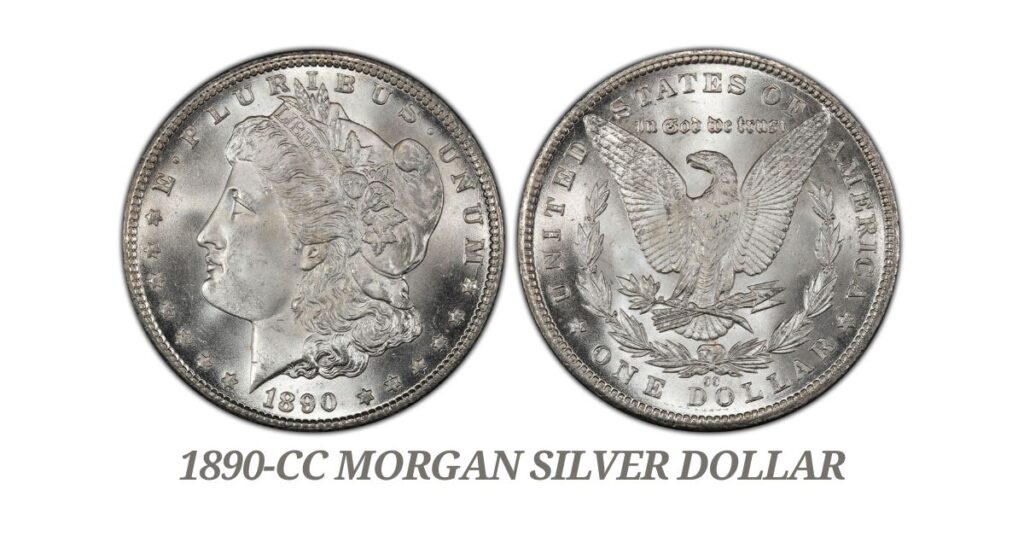
This is the question that actually settles it. Four mints struck 1890 dollars — Philadelphia (no mark), New Orleans (“O”), San Francisco (“S”), and Carson City (“CC”) — and survival rates differ sharply.
Philadelphia (no mint mark): Most common. Greysheet prices these from $48.73 in circulated grades up to $15,000 for a top Mint State example.
New Orleans (“O”): Just as available in low grades but tougher to find well-struck. Values run $48.73 to $50,000.
San Francisco (“S”): Slightly scarcer at the top. Pricing spans $48.73 to $20,400.
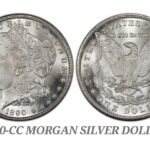
Carson City (“CC”): The one collectors chase, and usually the answer people are hoping for when they ask how much their 1890 silver dollar is worth. Carson City 1890 dollars start at $135 even in modest grades and climb as high as $40,000, with rare Deep Mirror Proof-Like examples reaching $666 to $90,000. The 1890-CC mintage of 2,309,041 was the largest of any Carson City silver dollar year.
That last point trips people up. A CC mark feels rare by reputation. It’s not — it was the highest-mintage CC dollar ever struck, and large Treasury hoard releases mean nice-condition examples are more available than the mystique suggests.
What Determines How Much Your 1890 Silver Dollar Is Worth
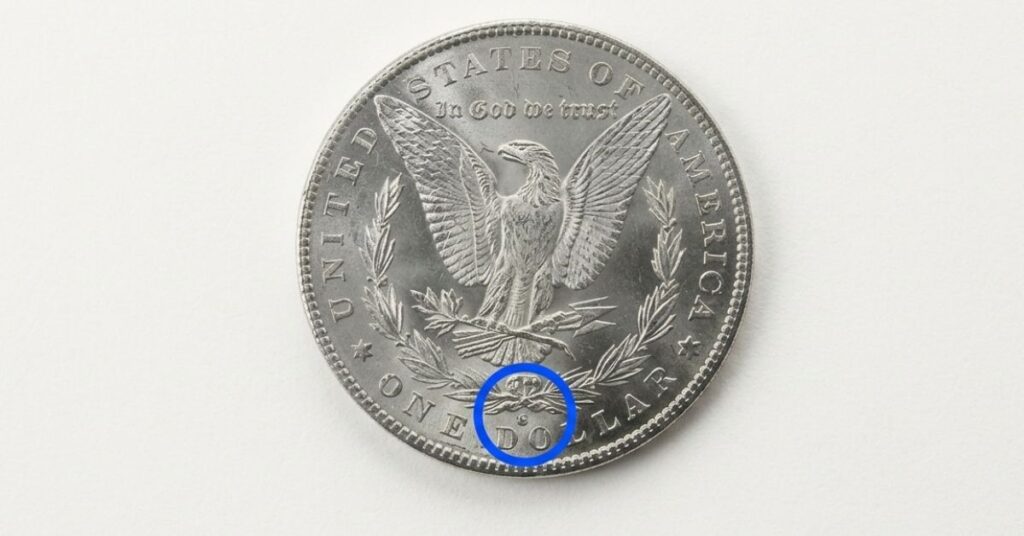
Three things to check before you guess:
- Mint mark location — beneath the wreath bow on the reverse, or absent for Philadelphia strikes
- Wear on Liberty’s cheek and hair — first place detail disappears
- Luster in the fields — uncirculated coins still show soft sheen
If your coin shows real wear but no scratches or cleaning, it’s probably $48–$150 depending on mint mark. If it still has mint luster and sharp detail, get it graded before you sell — raw guesses are how people undersell a coin worth far more.
Why Grading Population Data Changes the Answer
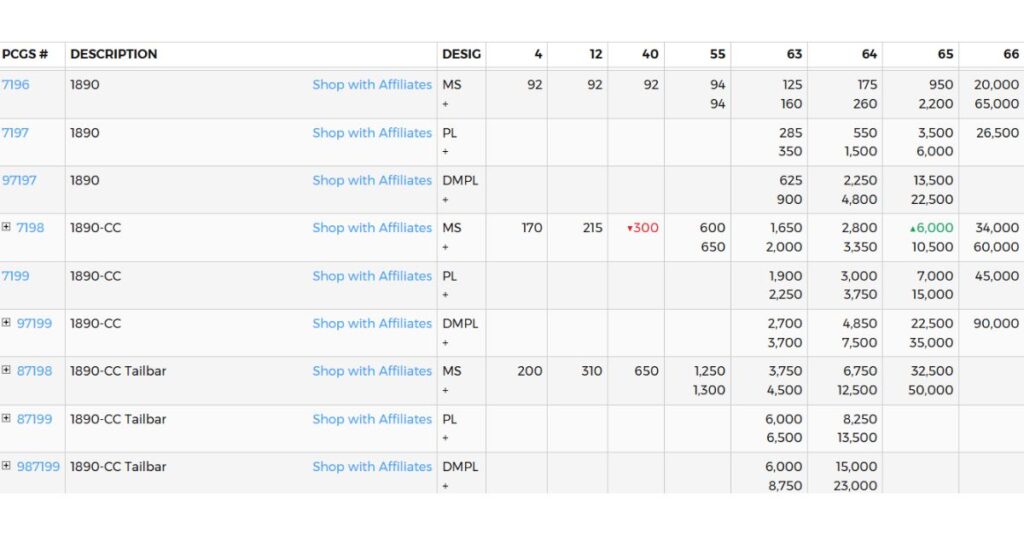
This is where most online answers stop short — they quote one number and ignore what certification actually does to it. Among certified 1890-CC dollars, Proof-Like examples make up roughly 3% of the certified population and Deep Mirror Proof-Like coins about 6%, and those designations alone can multiply value several times over compared to a standard strike at the same numeric grade.
Anyone who has studied Morgan dollar markets closely knows grading isn’t just about wear. Eye appeal, strike quality, and surface reflectivity all factor into what a coin actually sells for, which is why two coins both labeled “MS63” can sell for very different prices — and why a population report matters as much as the grade number itself.
As of 2026, the bullion floor underneath every answer to how much a 1890 silver dollar is worth keeps rising. Spot silver traded around $65.36 per troy ounce on June 19, 2026, and silver remains roughly 80% higher than it was a year earlier despite recent weekly pullbacks. A Morgan dollar contains 0.7734 troy ounces of pure silver, which pushes melt value alone to roughly $50–$51 per coin — the reason even the most worn 1890 dollars rarely sell for less than that today. Past performance does not guarantee future results, and silver prices fluctuate daily.
The Practical Consequence of Not Checking First
Here’s the thing — selling a worn 1890-CC dollar to a buyer who weighs it for melt value, without checking the mint mark, can cost you real money. A common Philadelphia dollar and a Carson City dollar can look nearly identical at a glance, but the CC version starts at nearly three times the melt-only price even in low grade.
Get the mint mark right before you sell. It’s a thirty-second check that can change how much your 1890 silver dollar is worth by hundreds of dollars.
Conclusion
So, how much is a 1890 silver dollar worth? Anywhere from about $48 for a common, worn Philadelphia strike to $90,000 for a certified Carson City Deep Mirror Proof-Like in top condition. Mint mark and grade decide everything in between. Check both before you sell, trade, or insure one.
Also Read: News on Silver 2026: Record High, Crash & What’s Next
FAQ
How much is a common 1890 silver dollar worth in worn condition?
Around $48 to $70, close to its silver melt value, for a Philadelphia, New Orleans, or San Francisco strike with visible circulation wear.
How much is a 1890-CC silver dollar worth compared to other mint marks?
More. A Carson City 1890 dollar starts around $135 in modest grades versus $48.73 for other mints in the same condition, nearly three times higher.
Is a 1890 silver dollar worth more than its silver content?
In almost every case. Even the most common circulated examples carry a small collector premium above melt value, and Mint State or Carson City coins are worth substantially more.
Does cleaning a 1890 silver dollar lower how much it’s worth?
Cleaning strips original luster and leaves visible hairline scratches, which graders penalize heavily and can cut a coin’s value by half or more.
Is it worth paying for grading on a 1890 silver dollar?
If it shows little to no wear. Certification from PCGS or NGC confirms Mint State or proof-like status, which can multiply value several times over a raw, ungraded coin.
This article is for informational and educational purposes only. It does not constitute financial advice. Always consult a qualified financial advisor or professional coin grader before making any investment decisions.