Disclaimer: This article is for informational and educational purposes only. It does not constitute financial advice. Always consult a qualified financial advisor before making any investment decisions. Past performance does not guarantee future results.
Spot gold hit $5,595.46 per troy ounce on January 29, 2026 — a record high that sent thousands of first-time buyers searching for exactly how to invest in gold for beginners. That surge wasn’t random noise. Gold rose 64.5% in 2025, its best annual performance since 1979, driven by safe-haven demand, geopolitical risks, easing interest rates, and sustained central bank buying. For anyone trying to figure out how to invest in gold for beginners in 2026, understanding why that happened matters more than chasing the number itself.
Gold doesn’t pay dividends. It doesn’t generate rent. What it does — when held correctly — is preserve purchasing power across inflation cycles and market crises. The method you use to own it determines your costs, your taxes, your liquidity, and ultimately how much of gold’s price movement you actually capture.
How to Invest in Gold for Beginners: 4 Methods That Actually Matter
In Q1 2026 alone, total gold demand reached 1,231 tonnes with a record value of US$193 billion, according to the World Gold Council. Retail investors, central banks, and institutions are all buying — but through completely different vehicles. Here are the four methods every beginner needs to understand before committing a single dollar.
Method 1 — Physical Gold: Coins and Bars
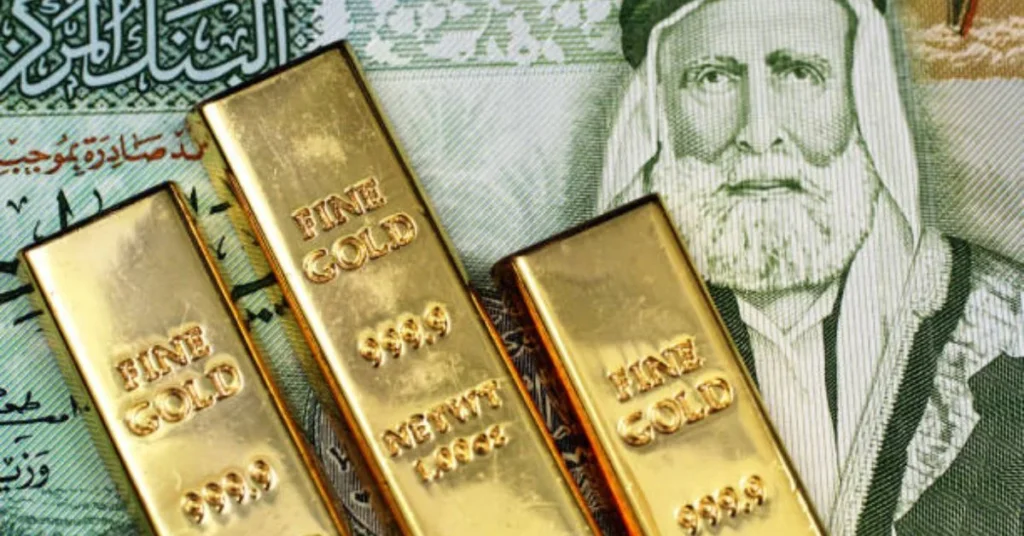
Buying physical gold means owning actual coins or bars, often sold by dealers online or in person. It gives you full control over the asset, but you’ll need to store it securely — either in a home safe or a professional vault.
Government-minted coins are the most practical entry point: American Gold Eagles, Canadian Maple Leafs, and South African Krugerrands carry globally recognized purity marks and deep secondary market demand. That last part matters enormously — when you eventually sell, recognized coins move faster and at better prices than obscure private mint bars.
The cost surprise most beginners don’t anticipate: physical gold hits you with 3–5% purchase premiums above the spot price — on a $40,000 position, that’s $1,200 to $2,000 in immediate costs before storage and insurance. A troy ounce (the standard XAU unit, 31.1 grams) purchased near $5,000 spot could realistically cost $5,200 at the dealer counter. You need gold to rise 4% before you break even.
Physical ownership’s irreplaceable advantage: zero counterparty risk. No custodian, no broker, no clearing house needs to remain solvent for your gold to have value. That’s not a theoretical point — it’s exactly why central banks hold physical reserves, not ETF shares.
What people get wrong: many beginners buy “collectible” or “limited edition” coins that carry 20–30% premiums over spot for numismatic value. If you’re investing in gold’s price, you want the metal — not the fancy packaging. Numismatic value and investment value are two different things, and conflating them is expensive.
Method 2 — Gold ETFs: The Smartest Starting Point for Most Beginners
For anyone learning how to invest in gold for beginners, ETFs remove the two biggest friction points: storage costs and high purchase premiums. SPDR Gold Trust (GLD) was the first US-listed ETF backed by a physical asset, holding gold in vaults with custodians including JPMorgan Chase in the US and HSBC in London.
GLD carries an expense ratio of 0.40% and manages nearly $158 billion in assets — making it the most liquid gold ETF on the market. For active traders who need deep options chains and tight spreads, that liquidity premium justifies the higher cost.
For buy-and-hold beginners, the better option is SPDR Gold MiniShares Trust (GLDM). GLDM charges just 0.10% annually — $40 per year on a $40,000 investment — compared to physical gold’s 3–5% upfront premiums on the same amount. A $1,000 investment in GLDM held over five years grew to $2,427, slightly outperforming GLD’s $2,396 over the same period — the 0.30% annual fee difference compounding meaningfully over time.
iShares Gold Trust (IAU) sits between the two at a 0.25% expense ratio, tracks the LBMA Gold Price benchmark, and holds 481.63 tonnes of physical gold. It’s the quiet, efficient middle option that suits most long-term retail investors who don’t need GLD’s institutional-grade liquidity.
One thing ETFs can’t give you: physical possession. In a severe financial system disruption, your ETF shares are still a claim on a financial institution. For most beginners with modest initial allocations, this is theoretical. As position sizes grow, it becomes a real consideration.
Method 3 — Gold Mining Stocks and Miner ETFs
Mining stocks don’t own gold — they own the businesses that extract it. That creates a completely different risk and return profile.
Mining stocks often rise faster than the price of gold when demand is strong, because extraction costs are relatively fixed. If gold moves from $4,000 to $5,000 and a miner’s cost per ounce stays at $1,800, its profit margin has expanded dramatically without doing anything differently. The reverse is equally brutal on the way down.
Single mining stocks add company-specific risk on top of commodity risk — geological problems, labour disputes, regulatory changes, and management decisions can destroy value even during gold bull markets. For beginners specifically learning how to invest in gold for beginners, the VanEck Gold Miners ETF (GDX) provides basket exposure across major producers rather than betting on one company’s operational competence.
Mining stocks are a leveraged play on gold prices. Useful for investors who want amplified exposure — genuinely dangerous for those expecting stable, gold-like price behavior.
Method 4 — Gold Futures on COMEX
COMEX and CME Group offer standardized gold futures contracts, with entry costs starting as low as $10 per contract, varying by exchange. A standard COMEX contract controls 100 troy ounces — roughly $500,000 in notional gold exposure at current prices. A 1% price move generates a $5,000 swing.
Futures trading is not where anyone learning how to invest in gold for beginners should start. The leverage, margin calls, contract rolling costs, and complexity make this a vehicle for experienced commodity traders — not a portfolio diversification tool for new investors.
What the Experts and Research Show
Central bank gold demand began 2026 strongly, with estimated net purchases of 244 tonnes in Q1 — exceeding both the previous quarter and the five-year average, according to the World Gold Council.
These institutions don’t operate on quarterly profit targets. They deploy capital into assets designed to preserve value across decades. The Bank of Korea announced in early 2026 its plans to incorporate overseas-listed physical gold ETFs into its foreign reserve portfolio from Q1 2026 — its first gold-related investment since 2013 — citing liquidity and ease of tradability as key advantages over physical gold. A sovereign institution re-entering gold after a 13-year absence signals structural conviction, not a reactive trade.
The World Gold Council projects central bank gold purchases could reach approximately 850 tonnes in 2026, compared to 863 tonnes in 2025 — still historically elevated levels.
The World Gold Council’s outlook holds that investment and central bank demand will continue to be supported by ongoing geopolitical risk, with further investment impetus from elevated inflation and persistent high gold prices.
For individual investors, the relevant insight is gold’s low correlation with equities during risk-off periods. Gold doesn’t always rise when stocks fall — but over multi-decade periods, the diversification benefit is real and measurable. Most financial planners suggest a 5–10% portfolio allocation as a starting point.
The Tax Dimension Beginners Always Overlook
Most guides on how to invest in gold for beginners skip this entirely. Don’t make that mistake.
In the United States, the IRS classifies physical gold and gold ETFs structured as grantor trusts — including GLD and IAU — as collectibles. Long-term capital gains on collectibles are taxed at up to 28%, compared to the standard 20% maximum rate on equities. On a $10,000 gain, that’s $800 more in tax.
Gold ETFs structured as commodity pools may be taxed under different rules — the 60/40 rule applies to some futures-based products, where 60% of gains are treated as long-term and 40% as short-term regardless of holding period. The tax treatment genuinely changes the after-tax math depending on which vehicle you use. Confirm the structure of any gold ETF before buying, and consult a qualified tax professional on your specific jurisdiction’s treatment.
If you skip this step, you’ll calculate returns on paper that never show up in your bank account.
A Practical First-Step Framework by Budget
- Under $500: Gold ETFs only. GLDM trades under $100 per share. No minimums, no storage costs, buy through any brokerage account.
- $500–$5,000: ETFs remain the most efficient route. Consider adding a 1-ounce government coin (American Eagle or Maple Leaf) for physical exposure if direct ownership matters to you.
- $5,000–$20,000: Split allocation — ETFs for liquidity and low cost, physical coins or small bars stored in a professional depository for direct ownership and counterparty-risk protection.
- $20,000+: A formal allocation strategy with a financial advisor is worth the conversation at this level. Storage, insurance, estate planning, and tax optimization all become meaningful variables.
When buying physical gold at any level, verify purity: investment-grade gold is 99.5% pure minimum (995 fine). The LBMA sets the global Good Delivery standard — any bar meeting LBMA specifications carries globally recognized assay marks and trades without discount in professional markets worldwide.
Frequently Asked Questions
Can beginners buy gold with very little money?
Yes. GLDM shares trade under $100, and fractional gold purchases through certain platforms start at $10 or less. Physical coins require more capital — a standard 1-ounce coin now costs above $5,000 — but ETFs remove that barrier entirely.
Is gold a safe investment for beginners in 2026?
No investment carries zero risk. Gold’s maximum drawdown over a recent five-year period reached -21%, meaning prices can fall significantly before recovering. Gold is a diversifier and inflation hedge — not a guaranteed return vehicle.
How much of my portfolio should go into gold?
Most financial planners suggest 5–10% as a reasonable starting allocation. Too little provides negligible protection; too much concentrates a portfolio in a non-yielding asset.
Are gold ETFs actually backed by real gold?
Yes. Physical gold ETFs like GLD, GLDM, and IAU hold actual gold bullion in professional vaults. GLD’s gold is held with custodians JPMorgan Chase in the US and HSBC in London. Each share represents a fractional interest in that physical gold.
What is the spot price and why does it matter?
The spot price is the current market price for immediate delivery of one troy ounce of gold, quoted in USD under the ticker XAU. It’s benchmarked globally through the LBMA Gold Price, fixed twice daily in London. All physical gold purchases, ETF valuations, and futures contracts reference spot price — it’s the number every gold investor needs to track.
The Bottom Line on How to Invest in Gold for Beginners
The single most important decision for anyone working out how to invest in gold for beginners isn’t whether to buy gold — it’s which vehicle fits your budget, tax situation, and ownership preferences. As of 2026, with central banks buying 244 tonnes in a single quarter and gold demand hitting record value levels, the structural case for gold in a diversified portfolio remains intact. But entering at historically high prices without a clear method and a long-term plan is how beginners turn a sound idea into a costly lesson.
Start simple. Start with ETFs. Understand the costs before you buy. And treat gold as a stabilizer — not a shortcut.
Disclaimer: This article is for informational and educational purposes only. It does not constitute financial advice. Always consult a qualified financial advisor before making any investment decisions. Past performance does not guarantee future results.