This article is for informational and educational purposes only. It does not constitute financial advice. Always consult a qualified financial advisor before making any investment decisions.
Most people walk into a pawn shop expecting a fair deal on their gold. Most people walk out having accepted far less than their metal was actually worth. The 14k gold price per gram at pawn shop counters across the U.S. is one of the most misunderstood numbers in personal finance — and that gap in understanding costs sellers hundreds of dollars on a single transaction.
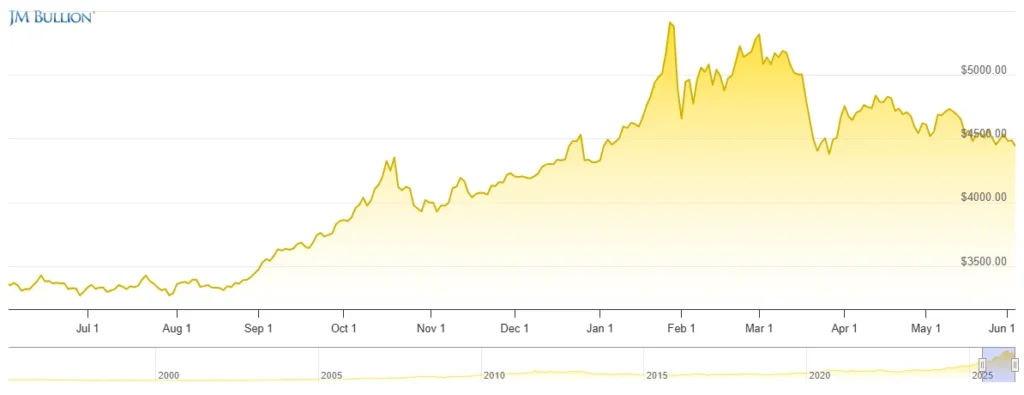
As of June 3, 2026, the live gold spot price sits at approximately $4,457 per troy ounce, which converts to roughly $143.30 per gram for pure 24k gold. That’s the market rate. What a pawn shop offers on your 14k jewelry is an entirely different figure — and understanding why requires knowing exactly how the calculation works.
How the 14k Gold Price Per Gram at Pawn Shop Is Calculated
Every offer starts with one formula.
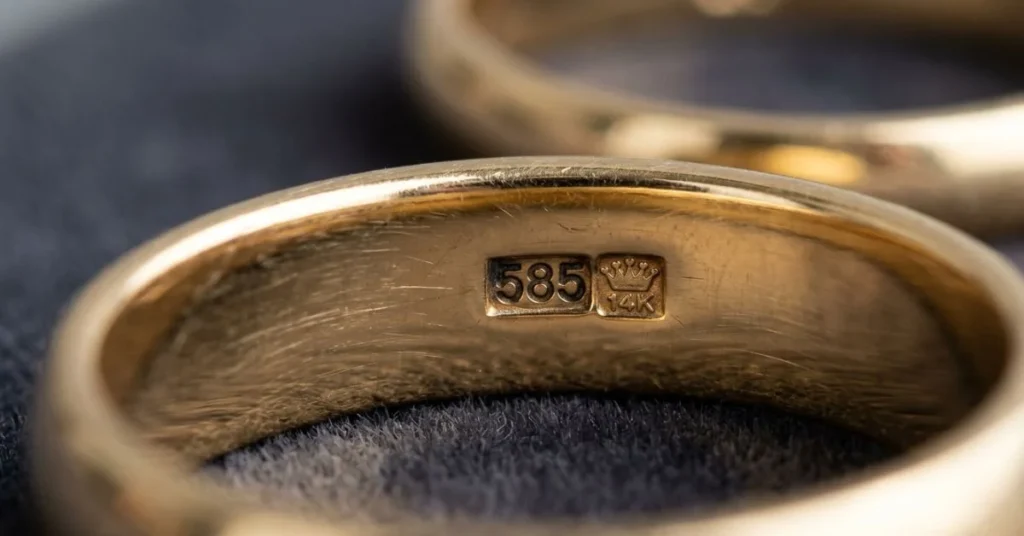
14k gold contains 58.5% pure gold — reflected in the “585” fineness stamp found on pieces made to LBMA international standards, or simply marked “14K” or “14kt” on American jewelry. The remaining 41.5% is alloy — copper, silver, or zinc — added for hardness and color. It carries no gold value.
The math pawn shops use:
Spot price per gram × 0.585 = 14k melt value per gram
With gold at current 2026 prices, the melt value for 14k gold sits at approximately $85.15 per gram. That’s the metal’s real worth if refined to pure gold today.
Here’s the part sellers often don’t see coming. Pawn shops don’t pay a fixed dollar amount per gram — they pay a percentage of that melt value, and that percentage shifts significantly by location and shop type. So when you’re researching the 14k gold price per gram at pawn shop before heading in, the melt value is your starting point — not the offer you should expect to receive.
A broken or tarnished piece carries the same melt value as a polished one of identical weight. Condition doesn’t move the pawn shop offer. Weight does. Karat does. Spot price does.
What Pawn Shops Actually Pay Per Gram for 14k Gold
This is where the real story lives.
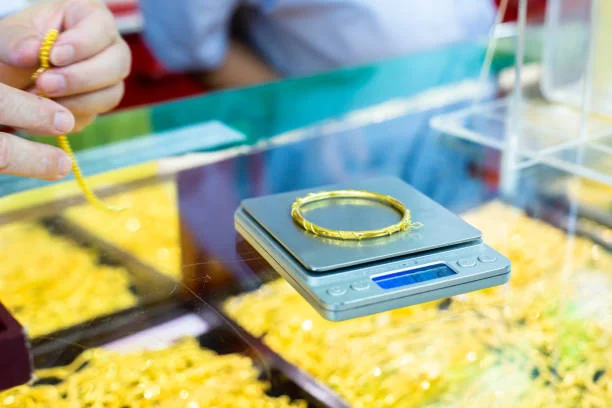
Pawn shops typically pay 30% to 60% of melt value, but the realistic average across multiple published industry sources lands closer to 40%. On a piece with a $1,000 melt value, most shops land between $400 and $500 on the offer.
In dollar terms, the 14k gold price per gram at pawn shop currently ranges from roughly $43 to $55 per gram — against a melt value of around $85. That’s a spread of $30 or more on every single gram you sell.
Work through a real example. A 10-gram 14k gold chain:
- Melt value at $85.15/gram: $851.50
- Pawn shop at 50%: $425.75
- Pawn shop at 40%: $340.60
- Pawn shop at 60%: $510.90
A study of firsthand pawn shop accounts by The Alloy Market found the average payout sits around 40% of melt value, with a reported range of 20–60%. That 20% floor isn’t theoretical — it appears at shops with high overhead and low gold purchasing volume.
Why does the 14k gold price per gram at pawn shop land so far below melt value? Pawn shops are generalists — they buy electronics, tools, instruments, and jewelry. Gold is one category among many. Their overhead model demands wider margins, and many don’t refine in-house, meaning they sell to a middleman who sells to a refiner, stacking another margin layer onto the transaction.
Speed is the product pawn shops are actually selling. They’re paying for the convenience of “cash now.” That convenience carries a steep price per gram.
How the 14k Gold Price Per Gram at Pawn Shop Compares to Other Buyers
Investors who track gold closely know that the type of buyer matters more than anything else when selling scrap jewelry. The same piece of 14k gold gets very different offers depending on where you take it.
Pawn shops offer same-day cash but typically pay 70–80% of melt in competitive urban areas. Local gold buyers and specialized jewelers often pay 75–90%, with same-day or next-day settlement. Online mail-in buyers typically pay 80–90% of melt, with a wait of several days to two weeks.
A specialized precious metals dealer pays 75–90% of melt value because they work directly with refineries, process higher volumes, and anchor their offers to the live spot market rather than a flat internal rate. On a 15-gram 14k gold chain, the gap between a 55% pawn shop offer and an 85% dealer offer is $405.
$405 on a single chain. Not a collection. One piece.
The LBMA Gold Price — set through independent twice-daily auctions in London — serves as the global benchmark every buyer anchors to, including pawn shops. The difference is how deeply each buyer discounts from that benchmark. A pawn shop’s discount is simply the widest of any legitimate buyer category.
14k is the most widely traded karat in the U.S. secondary market — pawn shops, gold dealers, and private buyers all recognize it and actively purchase it. That liquidity means you have real alternatives. A pawn shop is a choice, not a necessity.
What People Get Wrong About the 14k Gold Price Per Gram at Pawn Shop
The most expensive mistake sellers make: focusing on the karat stamp while ignoring the weight.
The “14K” mark tells you purity. The scale tells you value. A 14k ring weighing 2 grams and a 14k bracelet weighing 20 grams both carry the same stamp — but their melt values are $170.30 versus $1,703. Weight multiplies everything.
The correct formula: multiply purity (0.583) by weight in grams by the current spot price. A 5-gram 14k band with gold at $120/gram has a melt value of $349.80 — and a pawn shop offering 40% would pay roughly $139.92.
Second mistake: treating the first offer as fixed. Knowing your gold’s weight and the current market value gives you genuine leverage at a pawn shop, and the first offer is rarely the final one. Walking in with the melt value already calculated on your phone changes the conversation from “trust me” to “show me.”
Third mistake — and this one stings — is confusing hollow pieces with solid gold. Hollow chains look heavy but weigh far less than they appear. The 14k gold price per gram at pawn shop applies only to the actual metal weight on the scale, not how the piece looks.
Reputable pawn shops test gold purity before making any offer, using acid tests, electronic testers, or XRF scanners. A shop that skips testing and names a price immediately is one to walk away from.
The 585 Stamp: What It Means for Your Pawn Shop Offer
Walk in with a European-made gold piece and the evaluator may question it even when it’s clearly hallmarked. Pieces made to LBMA international standards carry the number “585” rather than “14K” — this fineness mark means 585 out of 1,000 parts are pure gold, mathematically identical to 14/24 = 58.3% purity.
Sellers unfamiliar with this marking sometimes accept lower offers, assuming their piece is a different or lesser grade. It isn’t. Same gold, same melt value, same 14k gold price per gram at pawn shop as a “14K”-stamped American piece of identical weight.
This matters particularly for gold bought in Europe, the Middle East, or through international dealers. The 585 hallmark is actually more precise than the karat system, which allows slight variation below the stated purity in some jurisdictions. A 585 stamp is exact.
As of 2026, with gold trading near historic highs and scrap volumes elevated globally, knowing your hallmarks is financial protection, not trivia.
Practical Consequences: What Happens When You Skip the Research
If you walk into a pawn shop without knowing the current melt value of your piece, you can’t accurately compare buyer offers and risk leaving real money on the table.
Here’s a concrete scenario. You’re holding a 14k gold bracelet weighing 12 grams. At a spot price of $143/gram, the 14k melt value is approximately $1,001. A pawn shop offering 40% hands you $400. A dedicated gold buyer offering 80% hands you $801. The math requires five minutes of research before you leave the house.
Pawn shops typically pay 50–70% of melt value for 14k gold, which means sellers can expect approximately $42 to $58 per gram based on current live prices. Knowing that number before you walk in is the only way to recognize a fair offer when you see one — or a low one when you’re being handed it.
For anyone not under a time constraint, selling to a dedicated gold buyer or refinery will almost always produce a higher return than a pawn shop. The pawn model exists for genuine emergencies. It doesn’t exist for value maximization.
Past performance does not guarantee future results when selling or holding gold, as spot prices shift continuously with global markets.
Who Gets the Best 14k Gold Price Per Gram at Pawn Shop
Not every seller receives the same offer — even at the same counter on the same day.
Pawn shops in major cities tend to pay closer to 75% of spot value, while small-town shops may pay as low as 40%, citing higher refining costs and resale risks. Location alone can swing the per-gram offer by 35 percentage points on identical jewelry.
Pieces that tend to command the highest 14k gold price per gram at pawn shop:
- Solid, heavy chains and bangles — more gold per piece, easier to evaluate
- Plain, unset designs — no gemstones to complicate or discount the offer
- Clear hallmarks — 14K or 585, stamped and legible
- Heavier rings and bracelets — weight adds up fast at current spot prices
Pieces that consistently underperform:
- Hollow chains (less actual gold than their size suggests)
- Gold-filled or gold-plated items (legally distinct from karat gold — many pawn shops won’t buy them)
- Pieces with gemstone settings (stones are often valued at near-zero by pawn shops even if they have real worth)
- Damaged clasps or missing components (some shops use damage as a negotiating point even though melt value is unaffected)
Also Read: 18K Gold Price Per Gram: The Real Numbers in 2026
FAQ
What is the 14k gold price per gram at pawn shop in 2026?
Pawn shops are actively buying 14k gold in 2026. Typical payouts range from $43 to $55 per gram, representing roughly 50–65% of current melt value depending on the shop’s location and margin structure.
Is selling 14k gold to a pawn shop worth it?
If maximizing value is the goal. Specialized precious metals dealers pay 75–90% of melt value versus 50–70% at most pawn shops. On a 15-gram chain, that gap exceeds $400.
Does condition affect the 14k gold price per gram at pawn shop?
A broken or tarnished piece carries the same melt value as a polished one of equal weight — pawn shops calculate from the gold content, not the appearance.
What does the “585” stamp mean and does it affect the pawn shop offer?
It means 14k gold. The 585 fineness mark indicates 585 out of 1,000 parts are pure gold — the international LBMA equivalent of the American “14K” stamp. The pawn shop offer is identical for both markings at the same weight.
Can I negotiate the 14k gold price per gram at pawn shop?
Knowing your gold’s weight and the current market rate gives you real negotiating leverage, and the first offer is rarely the best one. Calculate the melt value before you arrive and use it as your floor.
This article is for informational and educational purposes only. It does not constitute financial advice. Always consult a qualified financial advisor before making any investment decisions. Past performance does not guarantee future results.