This article is for informational and educational purposes only. It does not constitute financial advice. Always consult a qualified financial advisor before making any investment decisions.
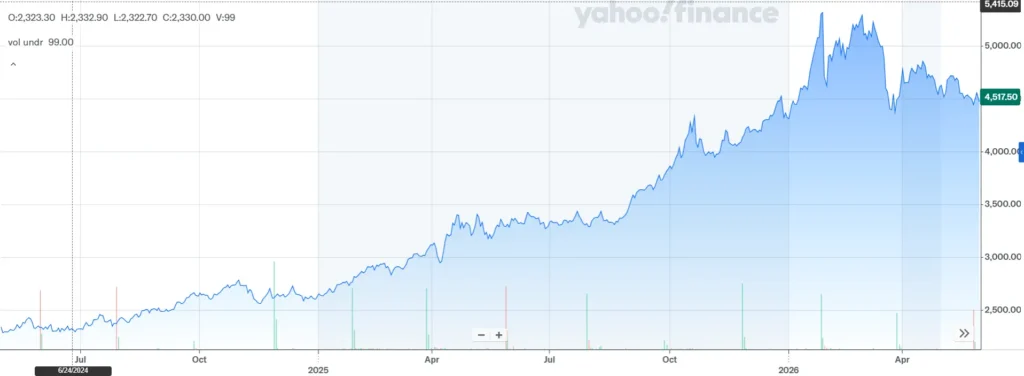
Gold hit an all-time high of $5,415.09 per troy ounce on January 28, 2026 — and that single event changed how buyers, sellers, and jewellery holders think about 18K gold pricing forever. If you own an 18K piece, a chain, a ring, or even scrap gold stamped “750,” understanding exactly what it’s worth per gram isn’t guesswork. There’s a formula. And most people aren’t using it correctly.
How the 18K Gold Price Per Gram Is Actually Calculated
Here’s where most people stumble. To get the 18K gold price per gram, you divide the current spot price per troy ounce by 31.1035 — the exact number of grams in a troy ounce — then multiply the result by 0.75, which represents 18K gold’s 75% purity.
That 31.1035 number matters more than most buyers realise. A common mistake is using a standard kitchen-scale ounce (28.35 grams) instead of the troy ounce standard the gold market runs on. Use the wrong ounce conversion and you’ll overestimate your gold’s value by a meaningful margin.
As of June 2, 2026, the 18K gold price per gram in USD sits at approximately $108.43, based on the live spot price tracked against global market benchmarks. That’s not a retail price — it’s the intrinsic melt value of the metal before any dealer spread, making charge, or premium is applied.
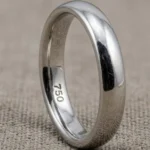
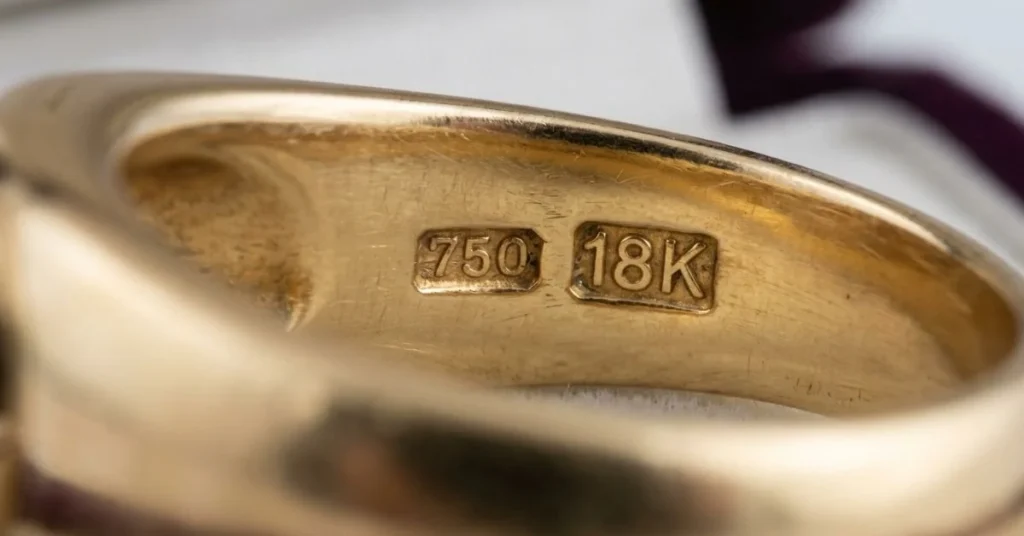
And the “750” stamp you’ll see on European and Asian jewellery? It’s a fineness hallmark from the millesimal system, meaning 750 parts per thousand — or exactly 75% pure gold. You’ll also find “18K,” “18KT,” and “750” stamps used interchangeably, but all indicate the same standard.
Why the 18K Gold Price Per Gram Has Surged in 2026
The price you see today didn’t appear from nowhere. A chain of very specific events pushed 18K gold values to levels no analyst had confidently predicted three years ago.
According to the World Gold Council’s Gold Demand Trends report, global gold demand surpassed 5,000 tonnes in 2025 for the first time ever, driven by a historic wave of investment inflows and sustained central bank buying. The total value of global gold demand hit a record US$555 billion — up 45% year-on-year.
The LBMA Gold Price set 53 new all-time highs throughout 2025, with the annual average price reaching US$3,431 per ounce. For anyone holding 18K gold through that period, every one of those highs added to their per-gram value in real time.
J.P. Morgan’s Global Research team projects around 755 tonnes of central bank gold purchases in 2026 — lower than the peak of more than 1,000+ tonnes seen in the prior three years, but still nearly double the pre-2022 average of 400–500 tonnes. Central banks don’t buy gold speculatively. They buy for long-term reserve protection. That structural floor under gold prices feeds directly into your 18K price per gram every single day.
According to the LBMA, central banks and sovereign wealth funds were absorbing roughly 1,000 tonnes per year — equivalent to at least a quarter of annual mined production. In an HSBC survey of 72 central banks, more than a third planned to increase purchases, and none intended to sell.
The practical consequence: if central banks aren’t selling, the supply pressure that typically suppresses gold prices stays muted. That directly supports per-gram values for 18K gold holders.
What People Get Wrong About 18K Gold Per Gram Pricing
Investors who track gold closely know this one well — and it’s the mistake that costs people money every week.
Most buyers assume the per-gram price they see quoted is what they’ll receive when selling. It isn’t. Pawn shops typically pay 50–70% of the melt value for 18K gold, meaning a gram valued at roughly $108 at spot could net you as little as $54 to $75 depending on the buyer. Jewellery retailers add making charges on top of melt value when selling, and deduct those same charges when buying back.
The second error is confusing karat with quality. 18K is not “better gold” than 24K in terms of purity — it contains less pure gold. At 75% pure gold, 18K is the international luxury standard for fine jewellery, preferred across Europe, Asia, and the Middle East precisely because the 25% alloy content adds durability that pure 24K cannot offer in wearable form. The per-gram price is lower than 24K because there is physically less gold in each gram — not because the quality of the gold fraction is inferior.
And here’s the counter-intuitive part: despite record gold prices in early 2026, overall jewellery demand in Q1 2026 slipped 23% year-on-year to 335 tonnes, according to World Gold Council data. High per-gram prices reduce jewellery buying. That means when 18K gold prices are at their highest, the secondary market for selling your pieces is actually thinner — fewer buyers are purchasing new jewellery, which can slow resale demand.
What Experts Say About 18K Gold Pricing in 2026
Anyone who has studied gold markets for any length of time understands that per-gram pricing doesn’t move in isolation — it tracks the full architecture of global monetary policy and geopolitical risk.
LBMA analysts identified three factors as the most important price drivers in 2026: US interest rates, geopolitical tensions, and central bank buying. Each one feeds directly into the spot price from which your 18K per-gram value is derived.
J.P. Morgan stated in a research note: “Even with the recent near-term volatility, we remain firmly bullishly convicted in gold over the medium-term on the back of a clean, structural, continued diversification trend that has further to run amid a still well-entrenched regime of real asset outperformance vs paper assets.”
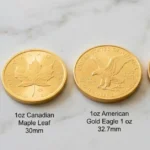
The World Gold Council’s Q1 2026 demand analysis, led by senior analyst Louise Street, noted that bar and coin demand of 474 tonnes in Q1 2026 was the second highest quarter on record, with Asian investors driving the charge into gold investment products. That physical demand surge — coins and bars, not just paper contracts — puts real buying pressure under the spot price that flows through to 18K gram pricing.
The LBMA forecast outlook for 2026 also notes that ETP (exchange-traded product) flows of more than 750 tonnes in 2025 were the strongest since the record inflows seen in 2020, with assets under management hitting record highs in both tonnage and value terms. Past performance does not guarantee future results.
The Difference Between Spot Price, Melt Value, and Retail Price Per Gram
Three numbers exist for every gram of 18K gold, and confusing them is expensive.
Spot price per gram is the pure-gold reference price at a given moment, derived from the global XAU benchmark traded on COMEX and reflected in the London Fix published by the LBMA. This is the number you divide by 31.1035, then multiply by 0.75 to get the 18K melt equivalent.
Melt value per gram is exactly that calculation — what the pure gold content of one gram of 18K is worth at spot. At the posted spot price of $4,541.20 per troy ounce recorded in May 2026, one gram of 18K (750) gold contained $109.50 worth of pure gold.
Retail price per gram is what a jeweller charges you — melt value plus making charges, design premium, brand margin, and applicable taxes. In high-end Italian or Swiss jewellery, that retail premium can run 200–400% above melt. The gold content per gram remains identical; the price reflects everything else that came with it.
Which means: if you’re buying jewellery purely as a gold investment, you are paying well above the intrinsic metal value from day one. If you’re buying bullion bars or coins stamped .999 (24K), you get closer to spot, with only a small fabrication premium. Knowing the difference changes how you approach both purchases and sales entirely.
Regional 18K Gold Prices Per Gram: Why They Differ
The 18K gold price per gram varies by country — sometimes significantly. This surprises buyers who assume gold is gold, priced the same everywhere. It isn’t.
As of May 30, 2026, the 18K gold price per gram in USD was $109.48, derived from a 24K spot price of $4,539.84 per ounce on that date. Premiums on retail products like gold bars and coins have stayed elevated in 2026 due to high physical demand and supply chain constraints.
Currency exchange rates directly affect local pricing. A buyer in Pakistan, the UAE, or India sees a 18K per-gram price converted at whatever their currency trades against the dollar that day — making local prices move even on days when USD spot prices are flat. VAT and import duties stack on top in many markets. India applies GST on gold jewellery. The UAE has a 5% VAT. These costs don’t change the metal’s international melt value, but they change what you actually pay at the counter.
And that’s the thing most international gold buyers miss: the melt value is universal. The retail price is highly local.
Practical Guide: How to Check Your 18K Gold’s Per-Gram Value Right Now
You need two things: today’s spot price in USD per troy ounce, and a scale that measures in grams.
- Step one — find the current XAU spot price. Check the World Gold Council’s Goldhub, Kitco, or Bloomberg Commodities. Don’t use yesterday’s price; gold moves continuously during market hours.
- Step two — divide the spot price by 31.1035. This gives you the pure gold value per gram.
- Step three — multiply by 0.75. This gives you the 18K melt value per gram.
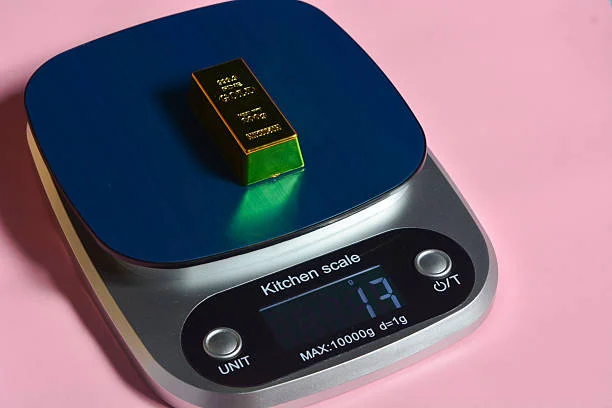
- Step four — weigh your piece in grams and multiply by the per-gram melt value. That’s your intrinsic metal value.
Example using recent data: if the spot price is $4,677 per troy ounce, dividing by 31.1035 gives approximately $150.42 per gram of pure gold. Multiplying by 0.75 puts 18K gold at roughly $112.82 per gram in melt value.
A 10-gram 18K bracelet at that rate contains $1,128.20 worth of pure gold. A buyer offering you $600 for that piece isn’t making a small profit — they’re making a very large one.
Also Read: Why Gold Price Goes Up and Down: The Real Drivers
FAQ
What is the 18K gold price per gram in USD today?
As of June 2, 2026, the 18K gold price per gram is approximately $108.43 USD, based on the current live spot price and updated market benchmarks. This figure changes throughout each trading day.
Is 18K gold the same as 750 gold?
The “750” hallmark means 750 parts per thousand pure gold — exactly 75%, which is the definition of 18K. The stamps “18K,” “18KT,” and “750” all indicate the same standard and are used interchangeably across different markets.
How do you calculate the price of 18K gold per gram?
Divide the current spot price per troy ounce by 31.1035 to get the pure gold price per gram, then multiply by 0.75 for 18K purity. For example, at a $4,677 spot price, the 18K per-gram melt value is approximately $112.82.
Why is the 18K gold price lower than 24K per gram?
18K is always priced lower than 24K per gram because it contains only 75% gold. At current market rates, 18K gold is worth approximately $112.76 per gram compared to a higher rate for pure 24K — the 25% alloy content (copper, silver, or palladium) carries negligible precious metal value.
Will 18K gold prices keep rising in 2026?
No one can guarantee future price direction. The LBMA’s 2026 analyst forecasts indicate that gold prices will remain elevated by historical standards throughout the year, with US interest rates, geopolitical tensions, and central bank buying identified as the three primary price drivers. Past performance does not guarantee future results.
This article is for informational and educational purposes only. It does not constitute financial advice. Always consult a qualified financial advisor before making any investment decisions.