This article is for informational and educational purposes only. It does not constitute financial advice. Always consult a qualified financial advisor before making any investment decisions.
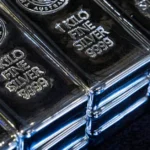
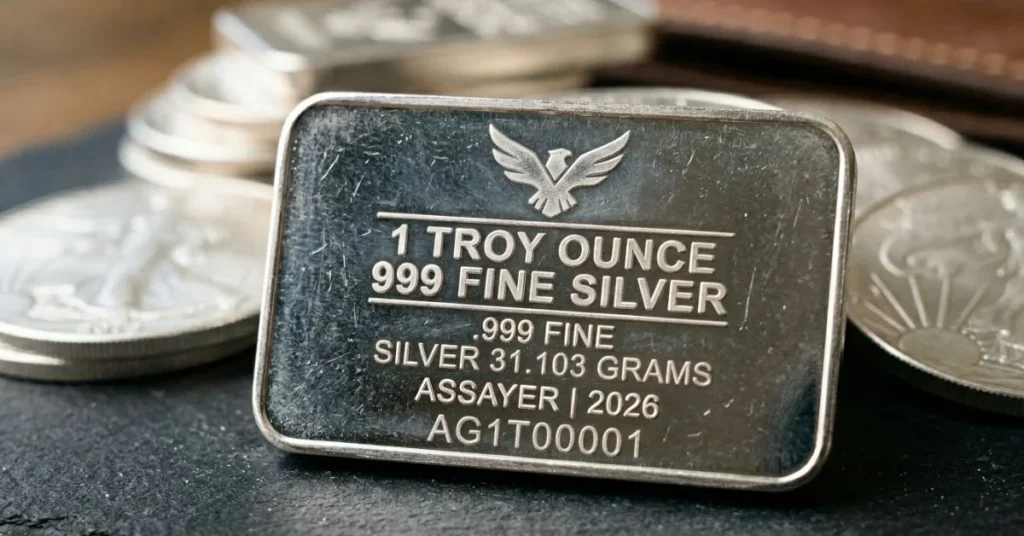
Most people who buy silver bars or coins never stop to question what those stamped markings actually mean. “1 TROY OZ .999 FINE SILVER” sits right there on the surface — four words that determine exactly what you own, what it’s worth on any exchange in the world, and whether it qualifies for serious investment markets. Understanding troy ounce 999 fine silver isn’t just interesting background reading. Get it wrong and you might pay a premium for something that doesn’t meet LBMA Good Delivery standards, or worse, miscalculate the actual melt value of what you’re holding.
Silver hit a nominal all-time high of $121.67 per troy ounce on January 29, 2026, according to APMEX data. That milestone makes understanding exactly what a troy ounce of 999 fine silver represents more relevant than ever.
Why the Troy Ounce Is Not the Ounce You Think It Is
A troy ounce weighs approximately 31.103 grams — about 10% heavier than the standard avoirdupois ounce, which weighs 28.349 grams. That gap might look minor on paper. Multiply it across 1,000 ounces of silver, and you’re talking about nearly 2.75 kilograms of difference. Miscalculating that difference costs real money.
The troy ounce and its relatives — the grain and the pennyweight — have been used for weighing precious metals in England since the 12th century or earlier. The name traces back to the city of Troyes in France, a major trade hub during the Middle Ages where merchants from across Europe gathered for large-scale fairs trading wool, silk, fur, spices, and precious metals. Merchants needed a weight standard that couldn’t be gamed from stall to stall. That standard survived for nearly 900 years.
In 1527, during the reign of Henry VIII, a key ruling in the Trial of the Pyx officially changed England’s weight system for gold and silver from the ‘towre’ pound to the troy pound of 12 troy ounces. That single legal decision cemented the troy system across the English-speaking world.
Today, the troy ounce is used by the London Bullion Market Association (LBMA), COMEX exchange, and other global markets to quote the prices of good delivery gold, silver, platinum, and palladium. CME Group alone facilitates 27 million troy ounces of gold trades daily. Every number you see on a spot price chart, a futures contract, or a bullion dealer’s website refers to this specific unit of weight. Not the ounce on your kitchen scale.
Here’s the practical consequence: if you ever use a regular postal scale to weigh silver bars, every reading will understate the metal’s weight by roughly 10%. Anyone who has bought silver at a physical market and trusted an informal scale has likely made exactly this mistake.
What 999 Fine Silver Actually Means — and What People Get Wrong
The marking .999 means the silver is 99.9% pure — out of 1,000 parts, 999 are pure silver, with trace elements making up the remainder.
Most buyers assume that higher purity is always better. That’s not quite right. Only .999 and above meets LBMA Good Delivery standards for wholesale silver trading in 2026. The .9999 grade exists and commands collector premiums, but for standard bullion bars and coins traded on major markets, .999 is the accepted floor — not a second-tier option. Buying .999 fine silver puts you at the exact threshold for exchange-grade delivery.
What most investors also miss: .925 sterling silver, the standard used in most jewelry, does not meet investment-grade exchange requirements. At approximately $32 per troy ounce spot (April 2026 reference point), one troy ounce of .999 fine silver yields a melt value of $31.97 versus $29.60 for .925 sterling — a gap of $2.37 per troy ounce. Across a few hundred ounces, that difference becomes significant. Yet dealers sometimes sell sterling silver pieces with the same enthusiasm as bullion. Those are not the same product.
According to the LBMA’s own trading guide, for silver traded on the international market, a troy ounce represents one ounce of material of which a minimum of 999 parts in every 1,000 will be silver. That specific minimum is written into the Good Delivery rules — it’s not a loose approximation.
The counter-intuitive insight here: .9999 four-nines silver, while purer, actually trades at a premium over spot precisely because of collector demand, not because exchanges require it. The standard .999 grade is the institutional workhorse. Four-nines is the enthusiast’s choice.
How the Troy Ounce 999 Fine Silver Standard Works in Global Markets
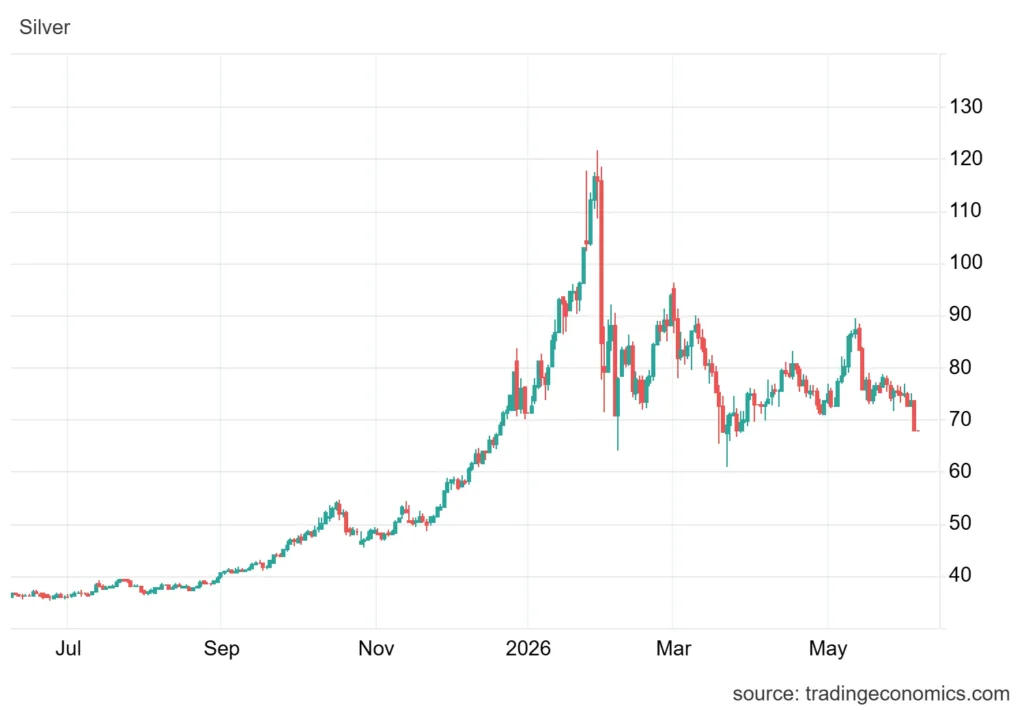
The spot price of silver is the current market price for one troy ounce of .999 fine silver. It can change numerous times throughout the day, with the most important exchanges located in Chicago, Hong Kong, London, New York, and Zurich.
When you see a live silver price quoted anywhere on the web, that figure represents one troy ounce of .999 fine silver in USD. The XAG ticker symbol tracks exactly this — 31.103 grams of silver at 99.9% purity. The London Fix, set twice daily through the LBMA process, provides the benchmark price used for physical delivery contracts worldwide.
The retail price of one troy ounce of .999 fine silver is determined by the current spot price plus premiums added by the mint and the dealer, influenced by factors including fabrication, distribution, and market demand. That premium can range from a few percent on generic silver rounds to 20%+ on government-issued coins like the 2026 Silver American Eagle. The 2026 Silver American Eagle contains one troy ounce of .999 fine silver and carries a face value of $1.00 USD, backed by the United States government.
Practical consequence: if you pay a large premium and need to liquidate quickly, you will typically receive only the spot price, not the premium you paid. Understanding this before you buy changes your purchasing strategy entirely.
Products carrying the “1 TROY OZ .999 FINE SILVER” stamp include government-issued coins (American Eagle, Canadian Maple Leaf, Australian Kangaroo), private mint rounds, and standard silver bars from accredited refiners on the LBMA Good Delivery List. All of these carry the same base specification — same weight, same minimum purity — while differing in design, mint, and the premium they command.
What the Research Shows: Industrial Demand Is Rewriting Silver’s Story
Troy ounce 999 fine silver isn’t just an investor product anymore. The industrial demand picture has shifted the underlying fundamentals of this market in ways that weren’t true a decade ago.
According to the Silver Institute’s World Silver Survey 2025, industrial applications consumed approximately 680 million troy ounces in 2024 — roughly 56% of total global silver demand of approximately 1,219 million troy ounces. More than half of every ounce mined disappears into a manufactured product. It doesn’t return to market the way investment silver does.
Solar photovoltaic technology remains the single largest driver of industrial silver demand. According to the 2025 World Silver Survey, solar panels alone are projected to consume over 230 million ounces of silver by 2026. Each panel requires 15–25 grams of the metal, used as silver paste to enable electrical conductivity in solar cells.
The silver market has been grappling with a structural supply deficit for five consecutive years, accumulating approximately 800 million ounces since 2021 — nearly a full year of global production. Inventories on major exchanges like COMEX have declined to historic lows.
The Silver Institute forecasts global automotive silver demand to increase at a compound annual growth rate of 3.4% between 2025 and 2031, with EV vehicles expected to overtake internal combustion engine vehicles as the primary source of automotive silver demand by 2027.
Investors who track silver closely know that this industrial consumption base acts as a structural floor under demand. Unlike gold — which is largely held in vaults and recycled at high rates — silver gets consumed. That asymmetry has no parallel in the gold market.
As of 2026, silver demand is at record levels, with total silver demand reaching 1.16 billion ounces in 2024, and the market remaining on track for another deficit with available metal in London vaults continuing to decline.
Buying Troy Ounce 999 Fine Silver: The Practical Breakdown
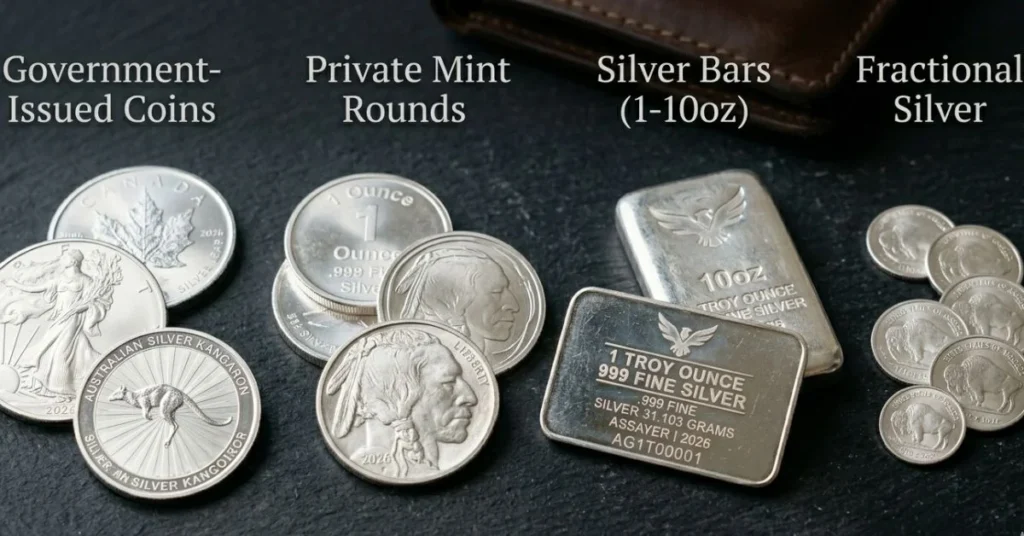
Not all .999 fine silver products carry equal liquidity. Here’s what actually matters when choosing between formats:
- Government-minted coins (American Eagle, Canadian Maple Leaf): highest liquidity globally, command the largest premiums, instantly recognizable to any dealer
- Private mint rounds: same .999 purity, lower premiums over spot, slightly harder to sell in smaller or less familiar markets
- Silver bars (1 oz, 10 oz, 100 oz): lowest premiums per troy ounce of .999 silver, preferred by volume buyers, require more verification in secondary markets
- Fractional silver (1/10 oz, 1/4 oz, 1/2 oz): .999 fine silver in smaller units, significantly higher premium per troy ounce, useful for barter or gifting scenarios
At a spot price of $80.58 per troy ounce (reference point May 2026), the melt value of a 1/10 oz silver round containing 0.1000 troy ounces of .999 fine silver is $8.06 — while the cheapest dealer price was $11.00, representing a 36.5% premium over melt value. That premium figure illustrates exactly why fractional silver is inefficient for pure investment purposes, even though the underlying .999 purity specification is identical.
A troy ounce is 10% heavier than the standard ounce. Always ensure that any silver price chart you study lists silver by the troy ounce and not by grams or any other measure — and that physical silver premiums are priced per troy ounce to make accurate comparisons.
Past performance does not guarantee future results.
Conclusion
Troy ounce 999 fine silver is one of the most precisely defined products in any market. It means 31.1035 grams of silver at 99.9% minimum purity — a specification maintained by the LBMA, COMEX, and every major exchange operating today. With silver posting an all-time nominal high of $121.67 per troy ounce in January 2026 and structural supply deficits running for five consecutive years, the specification behind every stamped bar and coin matters more than ever. Anyone buying troy ounce 999 fine silver who doesn’t understand the weight difference, the purity floor, or the premium mechanics is making decisions with incomplete information. Now you’re not.
Also Read: Troy Ounces in a Kilogram: The Number That Moves Markets
FAQ
Is .999 fine silver the same as pure silver?
The .999 fineness mark means 99.9% silver content — the standard threshold for investment-grade bullion and the minimum required by LBMA Good Delivery rules for wholesale silver trading.
Does a troy ounce weigh more than a regular ounce?
A troy ounce equals 31.1035 grams, while a standard avoirdupois ounce equals 28.3495 grams — making the troy ounce approximately 10% heavier and the correct unit for all precious metals pricing worldwide.
Is .999 or .9999 silver better for investment?
For standard bullion investment, .999 fine silver meets all exchange and LBMA requirements. The .9999 grade commands collector premiums but isn’t required for institutional-grade silver products.
What does the spot price of silver represent?
The spot price represents the current market rate for one troy ounce of .999 fine silver for immediate delivery, quoted in USD and updated in real time across exchanges in London, New York, Chicago, Hong Kong, and Zurich.
Why is there a premium above spot price when buying .999 silver?
Premiums cover minting, fabrication, dealer margins, and distribution costs. Government coins carry the highest premiums; silver bars carry the lowest. When selling, most dealers pay the spot price regardless of what premium was originally paid.
This article is for informational and educational purposes only. It does not constitute financial advice. Always consult a qualified financial advisor before making any investment decisions. Past performance does not guarantee future results.